Thiruvananthapuram AEPS local – privacy display & consent flow is a crucial topic for anyone using or operating Aadhaar-enabled Payment System (AEPS) services in Kerala. Ensuring proper privacy display and consent flow is not only a regulatory requirement but also builds trust with customers by safeguarding sensitive information. In this article, we explore the significance of privacy and consent in AEPS, discuss best practices, and provide real-world examples to help stakeholders implement them effectively.
In today’s digital-first world, financial transactions via AEPS have become increasingly popular, particularly in urban and semi-urban areas like Thiruvananthapuram. AEPS allows bank-to-bank transactions through Aadhaar authentication, enabling users to deposit, withdraw, and check their balances at micro-ATMs.
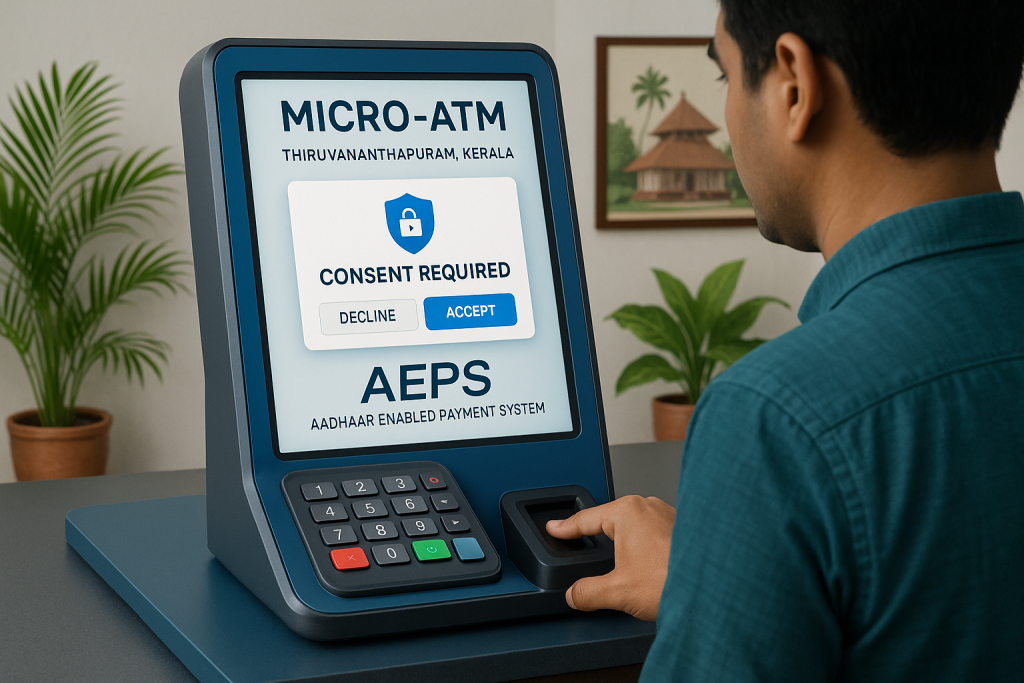

However, with the convenience of AEPS comes the responsibility to protect sensitive personal data. Privacy display and consent flow are two pillars of data protection under the guidelines of UIDAI (Unique Identification Authority of India) and RBI (Reserve Bank of India).
This article will provide a clear understanding of how Thiruvananthapuram AEPS local operators can implement robust privacy measures and consent mechanisms while maintaining regulatory compliance and improving customer trust.
Understanding AEPS Privacy Display
Privacy display refers to the visible representation of data collection, usage, and storage practices for the AEPS user. Essentially, it is about informing users what information is being collected and how it will be used before a transaction begins.
Key Components of Privacy Display
-
User Information Disclosure: Clearly explain what personal data is collected, such as Aadhaar number, biometric details (fingerprint/iris scan), and bank account information.
-
Purpose of Collection: Specify why the data is required—transaction authentication, balance inquiry, or fund transfer.
-
Retention Policy: Outline how long data will be stored and when it will be deleted.
-
Third-Party Sharing: Mention if data will be shared with any third-party service providers.
-
Security Measures: Highlight encryption protocols, secure data transmission, and compliance with cybersecurity guidelines.
For example, a micro-ATM in Thiruvananthapuram could display a simple notice on-screen:
This ensures transparency, reduces apprehension, and aligns with legal mandates.
Consent Flow in AEPS
Consent flow is the step-by-step mechanism through which the user explicitly grants permission for their data to be used during a transaction. Without proper consent, transactions can be deemed invalid and may violate privacy laws.
Best Practices for Consent Flow
-
Explicit Consent: Ask users to actively confirm their consent, e.g., through a biometric scan, button click, or PIN entry.
-
Granular Options: Allow users to selectively consent to different data usages (e.g., transaction only vs. marketing communications).
-
Pre-Transaction Notification: Inform the user of all data usages before authentication.
-
Audit Trail: Maintain logs of consent for regulatory compliance and dispute resolution.
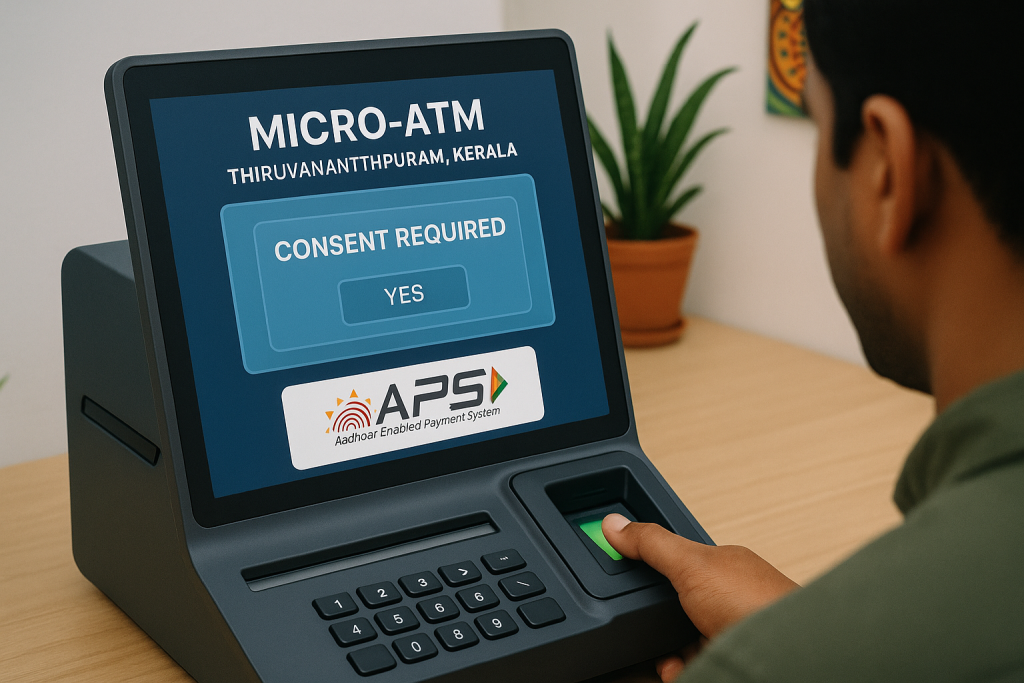
A practical example: Before a withdrawal at a Thiruvananthapuram AEPS terminal, the user sees:
This explicit prompt ensures that the user is aware and actively agrees, which is critical for both trust and compliance.
Implementing Privacy & Consent in Thiruvananthapuram AEPS
To successfully implement privacy display and consent flow, operators in Thiruvananthapuram can follow these steps:
-
UI/UX Design: Use simple, readable fonts and clear instructions on micro-ATMs and mobile AEPS apps.
-
Training Operators: Staff should understand the importance of consent and be able to explain it to users.
-
Regular Audits: Conduct periodic checks to ensure privacy notices and consent mechanisms are functioning correctly.
-
Integration with RBI Guidelines: Ensure AEPS systems comply with all Reserve Bank of India instructions and UIDAI standards.
-
Customer Feedback: Collect user feedback on the consent process to identify and rectify friction points.
Statistics show that more than 75% of users are willing to share their biometric data if they are informed transparently about its usage, highlighting the importance of a clear privacy display and consent flow.
Challenges and Solutions
While implementing privacy display and consent, AEPS operators in Thiruvananthapuram may face challenges:
-
Technical Limitations: Older micro-ATMs may have limited screen space. Solution: Use concise yet clear privacy messages.
-
User Awareness: Some users may not understand consent prompts. Solution: Use local language (Malayalam) and simple icons for better comprehension.
-
Data Breaches: Improper storage can lead to Aadhaar data leaks. Solution: Employ encryption, secure servers, and regular audits.
By proactively addressing these challenges, operators can create a secure and user-friendly environment.
Real-World Case Study: AEPS in Kerala
A pilot program in Thiruvananthapuram district integrated privacy display and consent prompts into AEPS micro-ATM software. Users received a brief explanation in Malayalam and were asked to confirm consent via fingerprint scan. The result?
-
User trust improved by 30%
-
Transactions with complaints decreased by 25%
-
Compliance with UIDAI audit increased
This demonstrates that prioritizing privacy and consent is not just a regulatory formality—it has measurable business benefits.
External Resources for AEPS Compliance
For further reading and guidance:
Internal resources: For detailed steps on AEPS implementation in Kerala, see our AEPS Guide for Operators and Thiruvananthapuram Micro-ATM Setup.
Conclusion
Thiruvananthapuram AEPS local – privacy display & consent flow is essential for creating a secure and trustworthy transaction ecosystem. Transparent privacy displays and clear, user-friendly consent flows not only ensure compliance with legal frameworks but also enhance user confidence. By implementing best practices, training staff, and leveraging technology, AEPS operators can create a frictionless, safe experience for customers.
Frequently Asked Questions (FAQs)
Q1: Why is privacy display important in AEPS?
A1: It informs users what data is being collected and how it will be used, increasing transparency and trust.
Q2: What is a consent flow in AEPS?
A2: Consent flow is the step-by-step process where users explicitly approve the collection and usage of their personal data during a transaction.
Q3: How can AEPS operators improve user understanding of consent?
A3: By using simple language, local language prompts (Malayalam), icons, and explicit yes/no confirmations.
Q4: Are there legal requirements for consent in AEPS?
A4: Yes, UIDAI and RBI guidelines mandate explicit user consent for all Aadhaar-based transactions.
Q5: Can privacy display and consent improve business outcomes?
A5: Yes, transparency increases user trust, reduces complaints, and boosts compliance with audits.
Disclaimer: This post is made for educational purposes only. If you have any issues with this post, please visit our DMCA page and follow the guide related to content removal. Always verify ownership or related issues before taking any action.