Finding Jammu AEPS Nearby services has become easier than ever, but with convenience comes the responsibility to use these Aadhaar-based financial services safely. In this detailed guide, we’ll break down everything you need to know about AEPS, and more importantly, the essential do’s and don’ts every customer should follow. Whether you’re a first-time AEPS user or someone who frequently visits a nearby agent, this article will help you make informed and secure financial decisions.

What Is AEPS and Why It Matters?
Aadhaar Enabled Payment System (AEPS) is a secure and convenient way to perform basic banking transactions using your Aadhaar number and biometric authentication. Instead of visiting a distant bank branch, you can walk into a nearby AEPS centre and:
-
Withdraw cash
-
Check account balance
-
Obtain mini statements
-
Transfer funds
According to NPCI data, AEPS handles millions of transactions every month, helping rural and semi-urban users access banking easily. The simplicity of this system is also why people constantly search for Jammu AEPS Nearby locations.
Importance of Knowing Your Jammu AEPS Nearby Centres
A verified AEPS centre ensures:
-
Authentic transactions
-
Secure biometric use
-
Minimal fraud risk
-
Easy access during emergencies
Knowing the right Jammu AEPS Nearby service point can save time, reduce travel costs, and provide dependable banking support.
Do’s for Customers Using Jammu AEPS Nearby
1. Verify the Agent Identity
Ensure the AEPS operator has a valid BC (Banking Correspondent) ID, company badge, and an authorised device. Trusted agents will always display their ID clearly.
2. Check the AEPS Device
Look for working biometric scanners, bank integration, and an OTP-free setup—since AEPS relies on Aadhaar authentication, no OTP should be asked.
3. Keep Your Aadhaar Details Confidential
Never share your Aadhaar number verbally in a crowded place. Instead, hand it over discreetly or write it down.
4. Ask for a Transaction Slip
Every AEPS transaction must generate a printed slip or SMS confirmation. Keep it until your balance reflects accurately.
5. Use AEPS Only at Trusted Centres
Search for “Jammu AEPS Nearby” using Google Maps or your bank’s official BC locator. Stick to centres with good reviews and high customer footfall.
Don’ts: Safety Risks to Avoid
1. Don’t Allow Multiple Finger Scans
Your fingerprint should be scanned only once per transaction. Multiple attempts may indicate fraud or device malfunction.
2. Don’t Share Your ATM PIN
AEPS never requires an ATM card or PIN. Anyone asking for it is violating guidelines and may be attempting theft.
3. Don’t Leave Without Confirmation
Never walk away until you verify your updated balance or receive a transaction receipt.
4. Don’t Use Public Wi-Fi for AEPS Transactions
While the device is secure, sharing networks can expose your personal data.
5. Don’t Trust Unregistered AEPS Agents
Unauthorized agents increase the risk of biometric misuse.
Why Customer Education Posters Matter
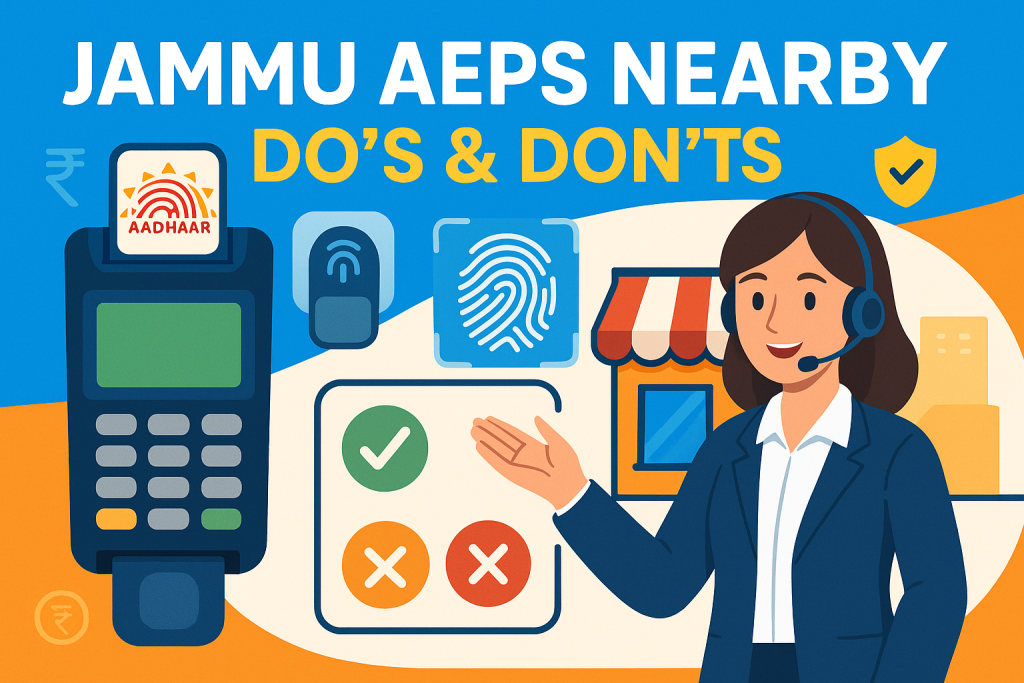
Customer-education posters placed at Jammu AEPS Nearby centres can drastically reduce fraud cases. Visual learning works better than verbal instructions, especially in rural and semi-urban areas where digital literacy is still growing.
These posters explain:
-
Proper AEPS process
-
How to protect Aadhaar data
-
Common frauds and how to avoid them
-
Emergency helpline numbers
Posters make the environment safer not just for customers but for BC agents as well.
Case Studies: Awareness Saves Money
Case Study 1 – Preventing Fraud
A woman from rural Jammu avoided a potential scam when an unregistered agent asked for her Aadhaar and ATM card together. She recalled seeing a poster at a legitimate AEPS counter that said, “AEPS never requires your ATM PIN.” The awareness saved her from sharing sensitive information.
Case Study 2 – Receipt Verification
A shop owner once entered the wrong Aadhaar digits during an AEPS withdrawal. The customer, remembering the “Check Your Slip Before Leaving” poster, verified the receipt and spotted the error. The agent quickly reversed the transaction.
These examples show how simple education can prevent big problems.
Internal & External Resources
Internal Resources (example placeholders for your website):
External Resources (DoFollow links):
-
NPCI Official AEPS Page – https://www.npci.org.in
-
UIDAI Aadhaar Safety Guidelines – https://uidai.gov.in
Frequently Asked Questions (FAQs)
1. What is Jammu AEPS Nearby?
It refers to the closest AEPS centres in Jammu where customers can withdraw cash, check balance, or transfer funds using Aadhaar authentication.
2. Is AEPS safe for daily use?
Yes, AEPS is secure when used at authorized centres. Biometric data is encrypted and protected.
3. Do I need a PIN for AEPS transactions?
No. AEPS requires only Aadhaar and fingerprint authentication, not a PIN.
4. How can I find a verified AEPS agent in Jammu?
Use Google Maps, NPCI’s BC locator, or your bank’s official directory.
5. Can AEPS transactions fail? What should I do?
Yes, sometimes due to network or biometric issues. If a transaction fails, keep the slip and contact your bank.
Conclusion
Understanding the do’s and don’ts of Jammu AEPS Nearby services ensures safer, smoother, and more reliable financial transactions. AEPS brings banking closer to people—but only when used responsibly. With the right awareness, verifications, and precautions, customers can enjoy secure access to essential banking services anytime, anywhere.
If AEPS is part of your daily routine, consider educating others as well. A simple poster or shared guideline can save someone from fraud or financial loss.
Disclaimer
This post is created for educational purposes only. If you have any issue with the content, please visit our DMCA page and follow the removal guidelines. You must verify ownership or concern before requesting any content-related changes.