Aadhaar-based banking system that allows users to perform essential financial transactions through micro-ATMs or banking correspondents in rural and urban areas.

What Is AEPS Service?
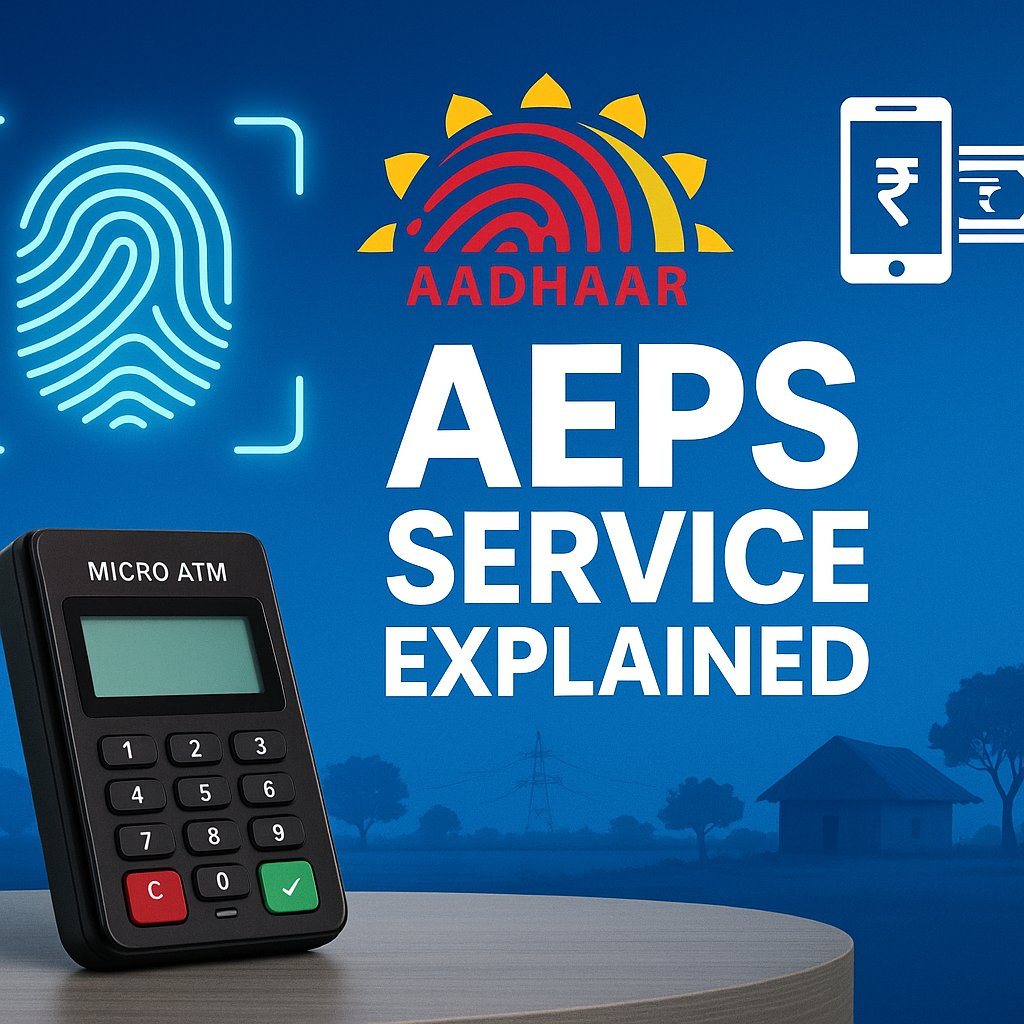
AEPS Service (Aadhaar Enabled Payment System) is a digital banking system introduced by the National Payments Corporation of India (NPCI). It allows banking transactions to be carried out using a customer’s Aadhaar number and biometric authentication.
Think of it as a mini-bank available at local shops, CSP points, ration shops, and rural kiosks. Even people who live far from bank branches can withdraw cash, check balance, or send money by simply using their Aadhaar-based identity.
It helps bridge the gap between rural households and mainstream banking, making India more financially inclusive.
How AEPS Works
The process behind AEPS is simple but highly secure:
-
Customer visits an AEPS-enabled shop or banking correspondent
-
Provides bank name and Aadhaar number
-
Gives fingerprint or iris scan for biometric authentication
-
The system connects to UIDAI’s Aadhaar database
-
If identity is verified, the transaction is approved
-
Customer gets a receipt
You do not need an ATM card, bank passbook, or smartphone—just Aadhaar.
Services Available Through AEPS
AEPS Service supports multiple banking functions:
-
Cash Withdrawal
-
Balance Inquiry
-
Mini Statement
-
Aadhaar to Aadhaar Fund Transfer
-
Bank-to-Bank Fund Transfer via AEPS
-
eKYC (Electronic Know Your Customer)
-
Micro Savings & Insurance Service Support
Because it doesn’t require a device or OTP, it is widely used among elderly, rural, and low-literacy populations.
Benefits of AEPS Service
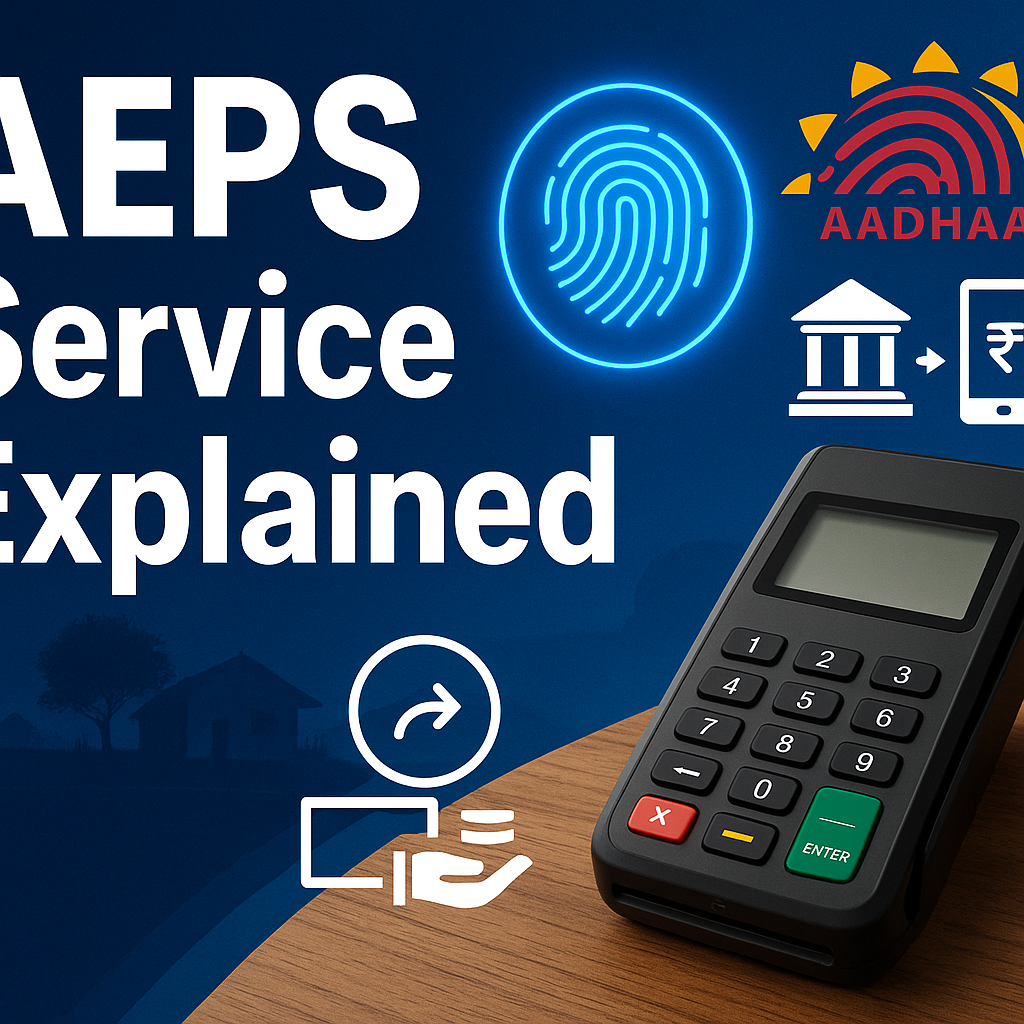
1. Financial Inclusion
Many rural areas lack proper banking infrastructure. AEPS fills this gap.
2. Convenience
Transactions can be done at nearby shops with minimal paperwork.
3. Security
Biometric authentication reduces fraud significantly.
4. Supports Government Schemes
Direct Benefit Transfers (DBT) are easily withdrawn via AEPS.
5. Low Cost
Both customers and merchants save time and money.
6. Growing Network
More than 6 million banking correspondents operate across India, making AEPS highly accessible.
Challenges & Limitations
While AEPS is successful, it has certain limitations:
-
Biometric mismatch due to worn fingerprints
-
Connectivity issues in remote areas
-
Fraud attempts through fake BC operators
-
Limited transaction types compared to traditional banking
Despite this, AEPS continues to evolve.
Real-World Examples & Case Studies
Case Study: Rural Rajasthan
A 68-year-old pensioner could not travel 20 km to visit the bank. With an AEPS shop in his village, he now withdraws his pension every month using just his fingerprint.
Case Study: Migrant Workers
In Maharashtra, migrant laborers use AEPS to send money home without needing ATM cards.
Case Study: Small Shop Owners
A Kirana store offering AEPS earns ₹3,000–₹10,000 per month in commissions alone.
AEPS in India: Growth & Statistics
According to NPCI’s recent data:
-
Over 480 million AEPS transactions occur monthly
-
More than 1.2 billion beneficiaries use Aadhaar-linked services
-
Rural India accounts for 60%+ of all AEPS usage
These numbers show how essential AEPS has become to India’s digital economy.
Who Can Use AEPS?
Anyone who has:
-
A bank account linked with Aadhaar
-
Biometric authentication enabled
Even accounts under PMJDY (Pradhan Mantri Jan Dhan Yojana) are eligible.
How Businesses Earn Through AEPS
Retailers or shop owners earn commissions per transaction:
-
₹3–₹15 for cash withdrawals
-
₹2–₹7 for balance inquiries
-
Higher margins for eKYC and micro-banking services
This makes AEPS a profitable addition for digital service providers.
Tips for Using AEPS Securely
-
Do not share your Aadhaar number with unknown operators
-
Only use authorized AEPS machines
-
Ask for a printed or SMS receipt
-
Keep your Aadhaar updated
Conclusion
AEPS Service has revolutionized banking in India by bringing financial services to every neighborhood—even the most remote. Its simplicity, biometric security, and widespread availability make it a lifeline for millions who need fast, accessible, and affordable banking options. As India continues advancing toward a cashless economy, AEPS will remain a pivotal tool in achieving full financial inclusion.
Disclaimer
This article is for educational purposes only. If you have any issues related to this content or want the post removed, please visit our DMCA page and follow the removal guidelines. You may also need to verify ownership or provide additional details regarding your request.