Imagine needing to withdraw cash, check your bank balance, or send money to a family member, but you’re miles from an ATM or bank branch, and you’ve forgotten your debit card. A decade ago, this would have been a major problem. Today, thanks to a revolutionary system called AEPS, or the Aadhaar Enabled Payment System, this scenario is easily solved with just your fingerprint.
In simple terms, AEPS in banking is a bank-led model that allows you to perform basic financial transactions at a micro-ATM (a banking correspondent’s device) using only your Aadhaar number and biometric authentication—your fingerprint or iris scan. It’s a cornerstone of India’s digital financial inclusion story, designed to bring banking to the doorstep of every citizen, especially in rural and remote areas.
Let’s dive deep into how AEPS works, why it’s a game-changer, and what it means for the future of banking in a country like India.
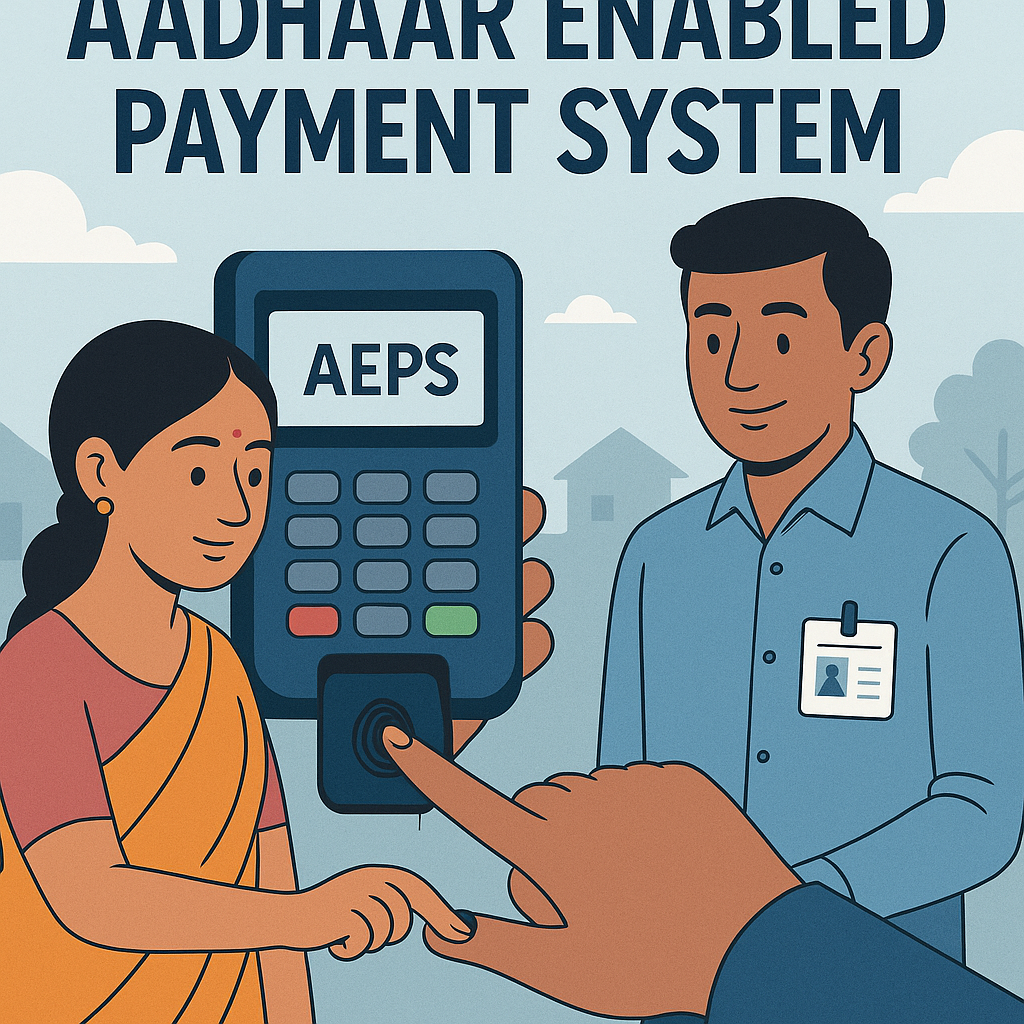

How Does AEPS Work? The Magic Behind the Fingerprint
The process is deceptively simple for the user, but it relies on a robust technological backbone. Here’s a step-by-step breakdown:
-
The Infrastructure: The system is built on the unique Aadhaar identity platform, managed by the Unique Identification Authority of India (UIDAI). Banks, NPCI (National Payments Corporation of India), and banking correspondents (BCs) or agents form the ecosystem.
-
The Transaction: To use AEPS services, you visit a local banking correspondent (often a shopkeeper or a business owner with a micro-ATM device).
-
The Authentication: You select the type of transaction (e.g., cash withdrawal) and provide your:
-
Aadhaar Number
-
Bank Name (where your account is linked to Aadhaar)
-
Biometric Data (fingerprint scan on the device)
-
-
The Backend Process: The micro-ATM sends this data to the NPCI switch, which routes it to the UIDAI for biometric verification. Once UIDAI confirms “yes, this fingerprint matches this Aadhaar number,” the request is forwarded to your specific bank.
-
Completion: Your bank’s system processes the request—debiting your account for a withdrawal or providing balance info—and sends an approval back through the same route. The BC agent then hands you the cash or tells you your balance. A transaction receipt is generated for record-keeping.
The entire process happens in under a minute, with no need for a card, PIN, or smartphone.
Key Services Offered by AEPS (The Big Four)
The Aadhaar Enabled Payment System primarily enables four types of interoperable banking transactions:
-
Cash Withdrawal: The most popular service. Withdraw money from your Aadhaar-linked bank account.
-
Cash Deposit: Deposit cash directly into your account through the BC agent.
-
Balance Enquiry: Check the available balance in your account instantly.
-
Aadhaar to Aadhaar Funds Transfer: Transfer money from your Aadhaar-linked account to another Aadhaar-linked account, using only the recipient’s Aadhaar number.
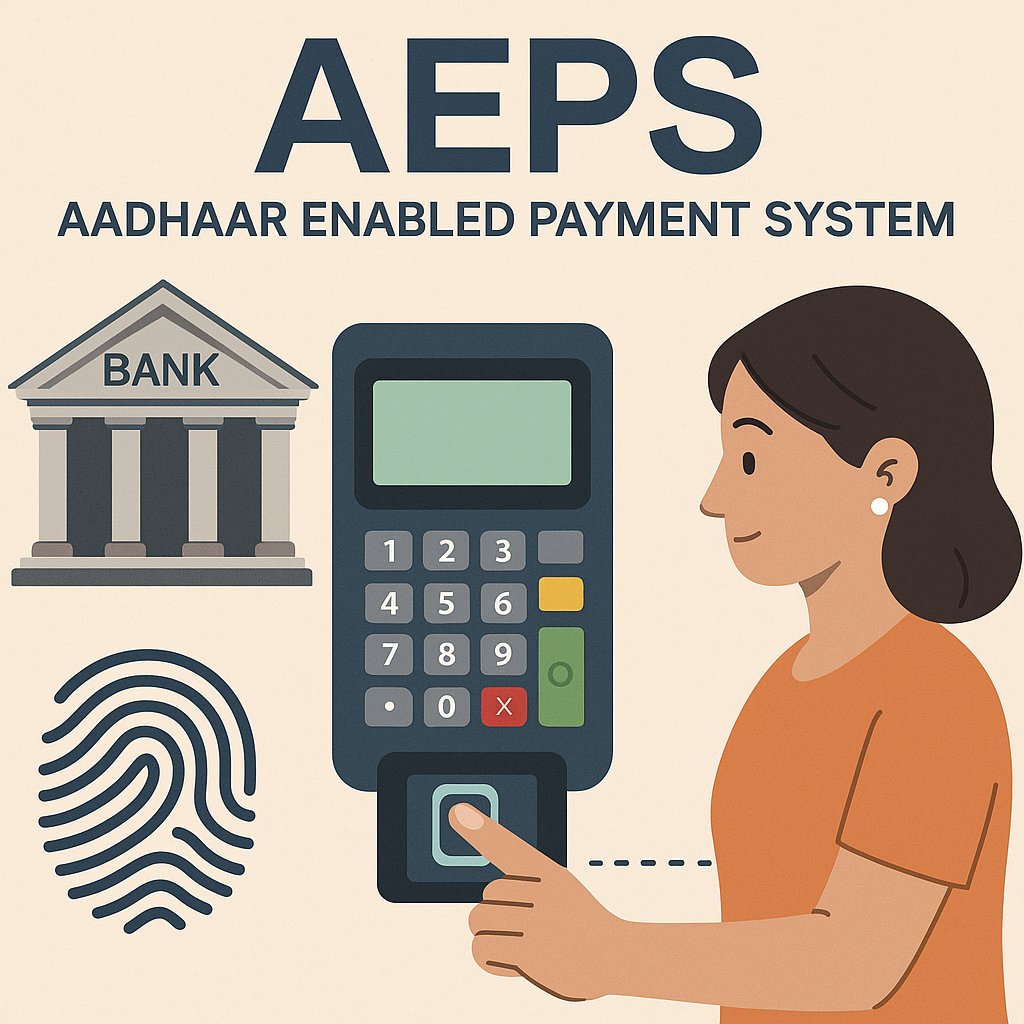
Why is AEPS a Landmark Innovation? The Benefits Unpacked
AEPS in banking is more than just a payments tool; it’s a socio-economic enabler.
-
Financial Inclusion Powerhouse: It has been instrumental in bringing millions of unbanked and underbanked citizens into the formal financial system. People in villages without bank branches can now access services locally.
-
Simplicity and Accessibility: It requires no technological literacy. You don’t need to remember passwords, carry cards, or own a phone. Your identity is literally at your fingertips.
-
Interoperability: This is its superpower. You can use any BC agent’s micro-ATM, regardless of which bank you hold an account with or which bank the agent represents. It breaks down traditional banking silos.
-
Security: Biometric authentication is highly secure and nearly impossible to forge, reducing the risk of fraud compared to stolen cards or guessed PINs.
-
Cost-Effective: It reduces the cost of delivering last-mile banking services for financial institutions, as setting up a micro-ATM is far cheaper than establishing a full branch.
-
Dignity and Empowerment: For daily wage workers, farmers, and homemakers, it provides direct, easy, and dignified access to their own money and government subsidies (like DBT transfers) without intermediaries.
The Challenges and Considerations
No system is perfect, and AEPS has faced its share of hurdles:
-
Biometric Failures: Poor fingerprint quality due to manual labour, aging, or sensor issues can sometimes lead to transaction failures.
-
Agent Network Reliability: The user experience depends heavily on the BC agent’s availability, honesty, and liquidity (having enough cash on hand).
-
Limited Transaction Scope: Currently, it supports only basic transactions. More complex services like mini-statements, bill payments, or recharges are not universally available.
-
Connectivity Issues: In areas with poor internet connectivity, transactions can be slow or fail.
AEPS vs. UPI: Understanding the Difference
While both are NPCI products driving India’s digital payments, they serve different segments:
-
AEPS: Card-less, phone-less banking. Focused on basic banking and cash-based transactions for the financially underserved. Authentication is biometric.
-
UPI (Unified Payments Interface): Card-less, phone-based banking. Focused on digital, cashless payments between bank accounts using a Virtual Payment Address (VPA) or QR code. Requires a smartphone and internet.
Think of AEPS as the foundation that brings people into the banking net, and UPI as the advanced layer for those already within the digital ecosystem.
The Future of AEPS
AEPS is evolving. We are seeing the emergence of Aadhaar Pay, where merchants can accept payments directly into their bank account using only the customer’s Aadhaar and biometrics. Integration with wider fintech ecosystems and the exploration of newer, more reliable biometric methods are on the horizon.
Its role as a critical fallback option in a predominantly digital world—especially in rural India and for cash-heavy segments of the economy—remains irreplaceable.
Conclusion
So, what is AEPS in banking? It is far more than a payments protocol. It is a transformative bridge that connects biometric identity with financial identity, ensuring that essential banking is not a privilege but a accessible right for every Indian with an Aadhaar card. By turning any kirana store into a potential “bank branch,” it has democratized finance in an unprecedented way. While newer, flashier payment methods grab headlines, the humble Aadhaar Enabled Payment System continues to do the quiet, essential work of true financial inclusion, one fingerprint at a time.
Frequently Asked Questions (FAQs)
1. Do I need a debit card or smartphone to use AEPS?
No, that’s the core advantage. You only need your Aadhaar number and your registered fingerprint. No card, PIN, or phone is required.
2. Is it mandatory to link my Aadhaar with my bank account for AEPS?
Yes, your bank account must be seeded (linked) with your Aadhaar number for the AEPS system to identify and authenticate you for transactions.
3. Are there any transaction limits on AEPS?
Yes, limits are set by individual banks and the NPCI guidelines. Typically, the cash withdrawal limit is around Rs. 10,000 per transaction, with daily limits also applicable. It’s best to check with your bank for specific limits.
4. Is AEPS safe? Can someone forge my fingerprint?
The system uses live biometric authentication, which is very difficult to forge. The UIDAI’s system matches the live scan against its secured database. It is considered safer than traditional card-and-PIN methods from a replication standpoint.
5. What should I do if my AEPS transaction fails but money is debited?
Always collect the transaction receipt from the BC agent. It contains a unique reference number (UTR). Contact your bank’s customer care immediately with this UTR to initiate a trace and refund process. Failed transactions are usually reversed automatically within a few hours to a few working days.
6. Can I use AEPS if my fingerprint is not working?
In some cases, if fingerprint authentication fails repeatedly, the BC agent might be able to use an iris scan if the device supports it. If both fail, you will need to update your biometrics at an Aadhaar enrolment centre.
Disclaimer: This article is for educational and informational purposes only. It is not intended as professional financial or banking advice. The features and regulations surrounding AEPS are subject to change by the NPCI, UIDAI, and respective banks. Readers are advised to consult directly with their financial institution for the most current information and guidance. If you have any concerns regarding the content of this post, please refer to our DMCA policy page for procedures related to content removal and ownership verification.