AEPS Debit is becoming one of the most widely used banking features in rural and semi-urban India, yet most people still don’t fully understand how it works, why it’s important, and how it affects everyday financial activity. In this article, we will explore AEPS Debit in a simple, conversational, and deeply informative way—so that even a first-time user can understand it with confidence.

1. What Is AEPS Debit?
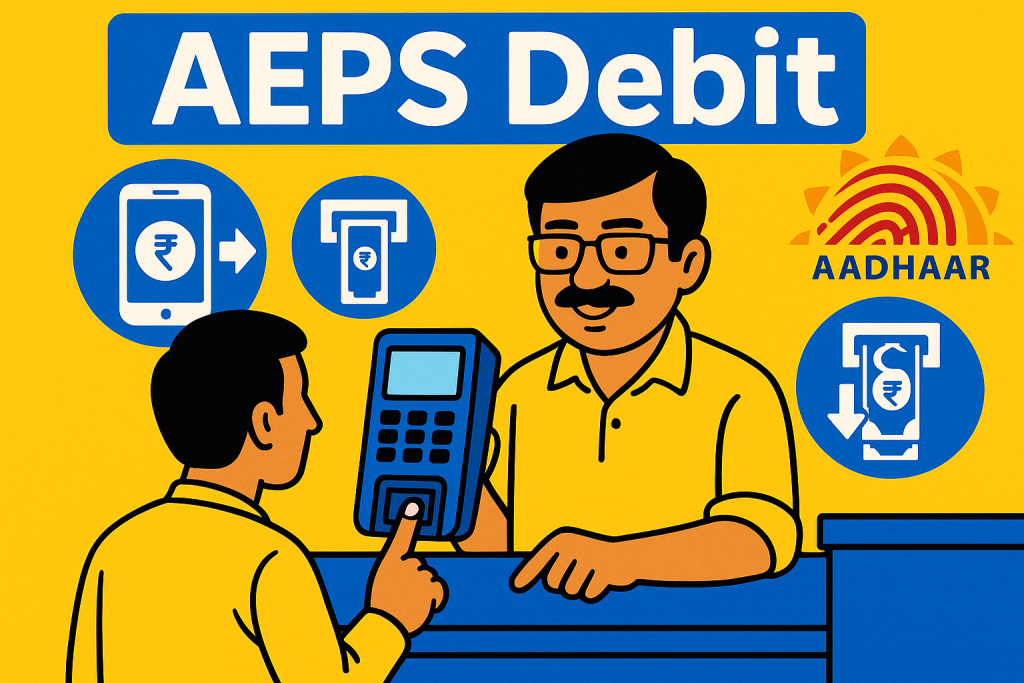
AEPS Debit refers to a debit transaction performed through the Aadhaar Enabled Payment System (AEPS). Instead of using a physical debit card, users authenticate the transaction using:
-
Aadhaar number
-
Fingerprint or iris scan
-
Bank mapping with Aadhaar
In simple terms, AEPS Debit allows you to withdraw or transfer money using nothing but your Aadhaar and biometric verification. This makes banking accessible even for people who do not have an ATM card or struggle with digital apps.
This system is managed by the National Payments Corporation of India (NPCI), which also operates UPI, IMPS, and RuPay networks.
(External resource: https://www.npci.org.in)
2. How AEPS Debit Works
AEPS Debit follows a straightforward process:
-
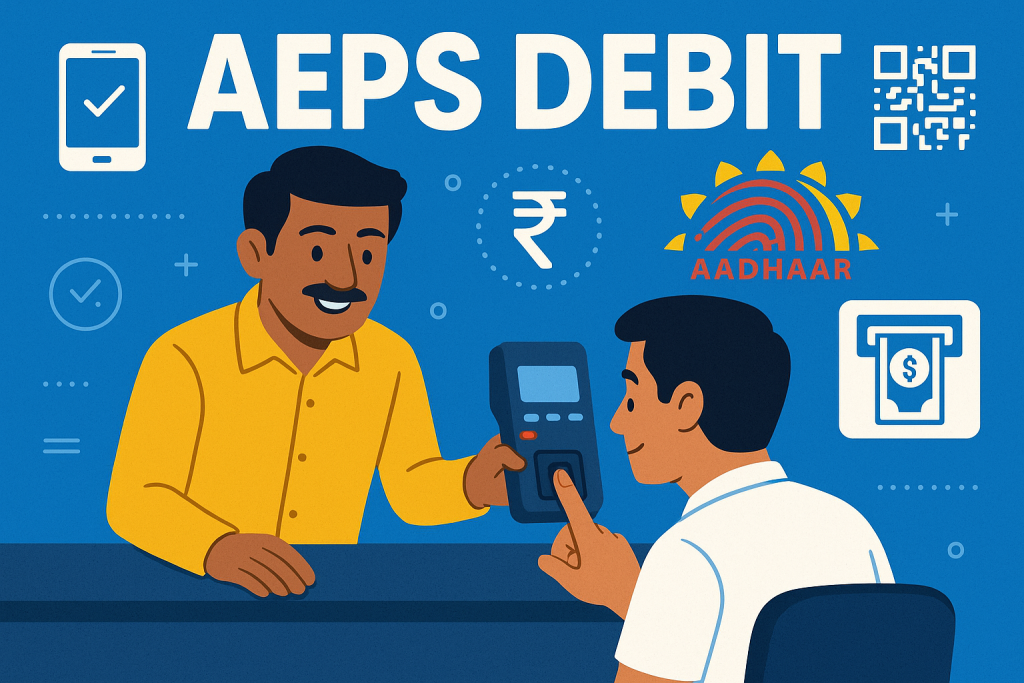
The customer visits an AEPS-enabled agent (often a shopkeeper or banking correspondent).
-
The agent enters the Aadhaar number and selects the desired service—cash withdrawal, balance check, or transfer.
-
The customer provides biometric authentication.
-
The bank verifies the Aadhaar–bank link and processes the debit transaction.
-
Cash is handed over, or the account is updated accordingly.
Key Features
-
No debit card or PIN required
-
Works in remote areas with limited banking infrastructure
-
Uses Aadhaar-based identity verification
3. Benefits of Using AEPS Debit
Inclusive Banking
Millions of users in rural India still lack ATM access. AEPS Debit solves this problem.
Easy Transactions
No need to remember complex PINs or use smartphones.
Low-Cost Banking
For agents and customers, AEPS is often more affordable than ATM withdrawals.
Empowers Local Shops
Kirana stores and CSC centers act as micro-ATMs, creating income opportunities.
Supports Government Schemes
Direct Benefit Transfer (DBT) beneficiaries can withdraw funds easily.

4. Real-Life Example to Understand AEPS Debit
Imagine Meena, a farmer living in a village without a bank branch nearby. She receives government subsidies via DBT but cannot travel 30 km every month to withdraw money.
With AEPS Debit, she simply goes to the nearest shop with an AEPS machine, verifies her fingerprint, and withdraws cash.
This small change significantly improves convenience and financial independence.
5. Challenges and Limitations
Even though AEPS Debit is powerful, it is not perfect.
Biometric Failure
Dusty hands, worn fingerprints, or machine errors can cause failed authentication.
Fraud Risks
If Aadhaar information is leaked, unauthorized attempts are possible (though rare).
Dependence on Agent Network
Without AEPS agents, users cannot perform transactions.
Transaction Limits
Banks may impose daily AEPS withdrawal limits.
6. AEPS Debit vs Traditional Debit Systems
| Feature | AEPS Debit | Traditional Debit Card |
|---|---|---|
| Requires Card | No | Yes |
| Requires PIN | No | Yes |
| Authentication | Biometric | PIN |
| Useful in Remote Areas | Yes | Limited |
| Dependent on Aadhaar | Yes | No |
AEPS Debit is designed for accessibility, while traditional debit cards are designed for convenience and digital payments.
7. Security Measures in AEPS Debit
NPCI and banks follow strict security protocols, including:
-
Encrypted biometric data transfer
-
Aadhaar–bank linking verification
-
Real-time fraud detection systems
-
Multi-layer authentication
Users are advised to keep Aadhaar details confidential and use only trusted AEPS agents.
8. Who Should Use AEPS Debit?
AEPS Debit is especially beneficial for:
-
Rural residents
-
DBT beneficiaries
-
People without debit cards
-
Senior citizens who struggle with mobile apps
-
Small businesses offering micro-ATM services
9. How Businesses Use AEPS Debit Services
Retail stores, CSC centers, and local entrepreneurs can earn commissions by offering AEPS Debit services. Many fintech companies like Paynearby, Ezeepay, and Fino Payments Bank provide AEPS agent onboarding.
(You can internally link to relevant posts like How to Become an AEPS Agent or Top Fintech Services in India.)
10. Frequently Asked Questions (FAQs)
1. What is AEPS Debit?
AEPS Debit is a debit transaction performed through the Aadhaar Enabled Payment System using biometric authentication instead of a debit card.
2. Is AEPS Debit safe?
Yes, it uses secure biometric verification and encrypted data, making it safer than many traditional methods.
3. Can I use AEPS without linking Aadhaar to my bank?
No. AEPS works only when your Aadhaar is mapped to your bank account.
4. What is the AEPS withdrawal limit?
Most banks allow ₹10,000 to ₹25,000 per day, but limits vary.
5. Can businesses earn money from AEPS services?
Yes. Agents earn commissions per transaction, making it a profitable rural banking service.
11. Conclusion
Understanding AEPS Debit is essential in today’s fast-evolving digital banking landscape. AEPS has bridged the gap between traditional banking and millions of underserved individuals across India. By enabling Aadhaar-based withdrawals and transactions, it empowers users who lack access to ATMs, smartphones, or digital banking tools.
AEPS Debit is not just a payment tool; it is a step toward financial inclusion, transparency, and convenience—especially for rural communities. As the system continues to grow, awareness and education will play a crucial role in ensuring safe and efficient usage.
Image Suggestion
Add an image:
Suggested alt text: “AEPS Debit transaction process illustrated”
12. Disclaimer
This post is created for educational purposes only. If you have any issues with the content or believe this article violates your rights, please visit our DMCA page and follow the guidelines for content removal. Ownership verification may be required during the process.