Thane Rural AEPS local – counterfeit cash detection at agent point plays a crucial role in protecting India’s last-mile banking ecosystem, especially in semi-urban and rural pockets where Aadhaar Enabled Payment System (AEPS) services are widely used. In simple terms, it refers to the systems, practices, and awareness measures adopted at local AEPS agent outlets in Thane Rural to identify and prevent the circulation of fake currency during cash transactions.
This article explains the concept in depth—what it means, why it matters, how it works on the ground, and what more can be done to strengthen it. Written from a practitioner’s perspective, it aims to help agents, customers, fintech operators, and policy observers understand the real challenges and solutions involved.

1. Introduction to AEPS in Thane Rural
The Aadhaar Enabled Payment System (AEPS) has transformed banking access in rural India. In areas like Thane Rural, where physical bank branches may be far apart, AEPS agents act as mini-bankers. With just an Aadhaar number and biometric authentication, customers can withdraw cash, check balances, or transfer funds.
However, this convenience comes with responsibility. Since AEPS transactions are heavily cash-based at the agent level, the risk of counterfeit currency entering circulation becomes real. This is where Thane Rural AEPS local – counterfeit cash detection at agent point becomes a critical operational and security concern.
2. Understanding Counterfeit Cash Risks at Agent Points
Counterfeit cash is fake currency designed to look like genuine notes. While banks use high-end machines to detect such notes, AEPS agents often operate with minimal infrastructure.
At the agent point:
-
Cash is accepted from customers for deposits or exchanges
-
Cash is handed out during withdrawals
-
Daily reconciliation depends on physical currency
If a counterfeit note slips through, the agent usually bears the loss—not the bank or customer.
3. Why Thane Rural Needs Strong Counterfeit Detection
Thane Rural includes tribal belts, agricultural zones, and fast-growing outskirts of Mumbai. Several factors increase vulnerability:
-
High cash dependency among daily wage workers
-
Low awareness of currency security features
-
Informal cash circulation in weekly markets (haats)
-
Limited access to banking infrastructure
Because AEPS agents are trusted faces in the community, any counterfeit issue can damage confidence in digital banking itself.
4. How Counterfeit Cash Detection Works at AEPS Agent Points
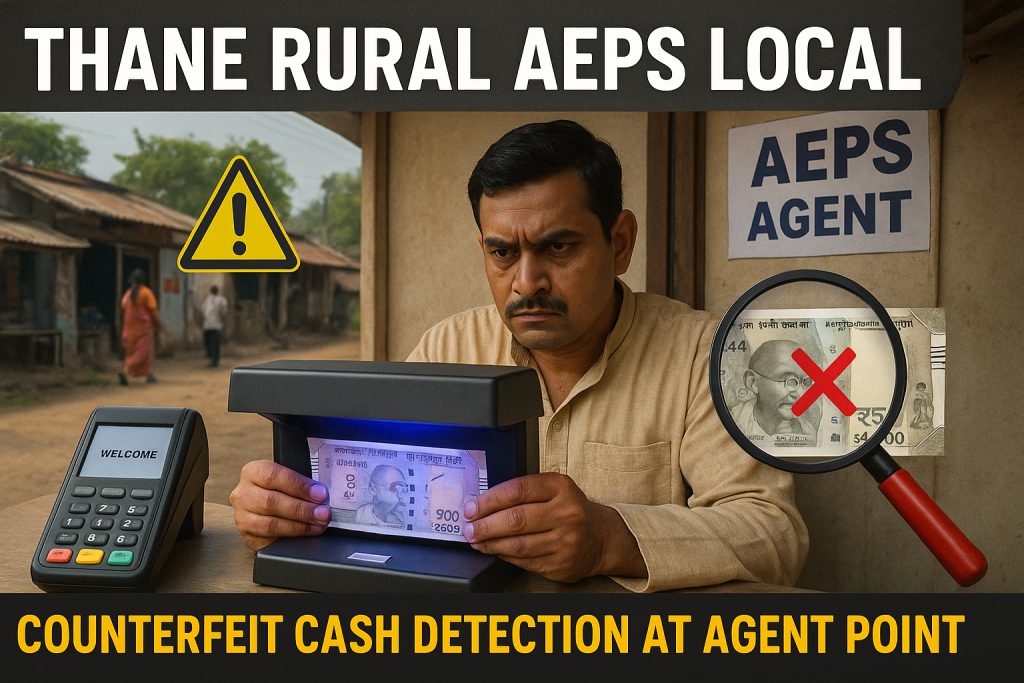
At present, Thane Rural AEPS local – counterfeit cash detection at agent point relies on a mix of manual checks, basic devices, and agent awareness.
Manual Verification
Agents are trained (formally or informally) to check:
-
Watermarks
-
Security threads
-
Color-changing ink
-
Raised print
Detection Devices
Some agents invest in:
-
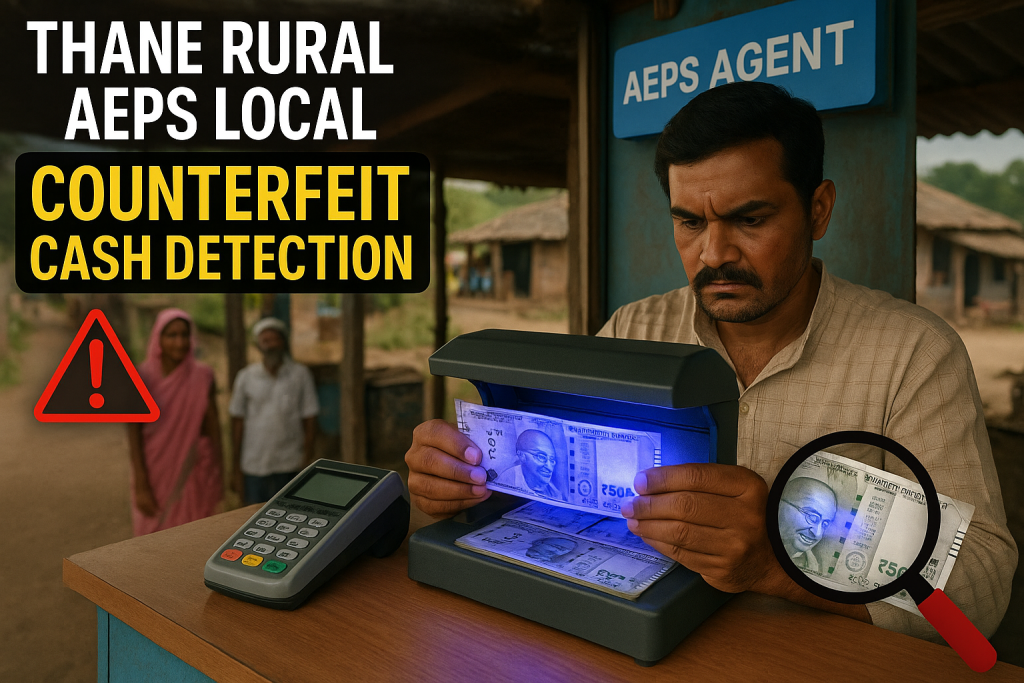
UV note detectors
-
Fake note detection pens
-
Portable currency scanners
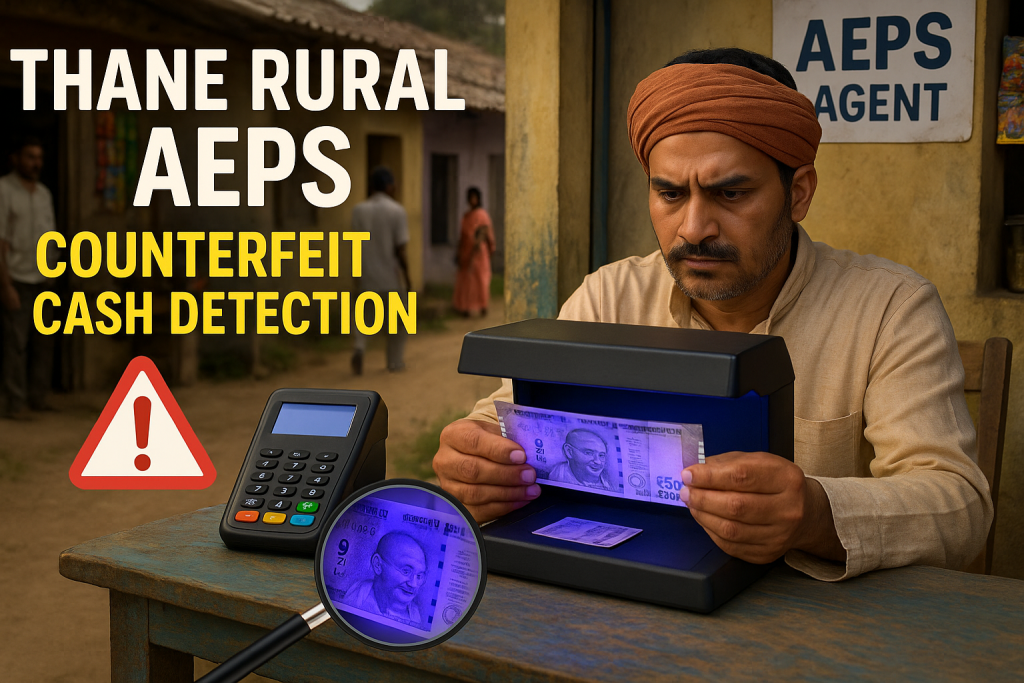
📷 Suggested Image Placement:
Image of an AEPS agent checking currency under UV light
Alt Text: Thane Rural AEPS local – counterfeit cash detection at agent point
5. Real-World Scenarios from Thane Rural
In 2023, several AEPS agents in rural Palghar and Shahapur belts (part of the broader Thane Rural banking network) reported losses due to fake ₹500 notes received during peak festival withdrawals.
A common pattern emerged:
-
Customer withdraws cash via AEPS
-
Agent later discovers fake note during bank deposit
-
Bank rejects the note
-
Agent absorbs the loss
These cases highlight why Thane Rural AEPS local – counterfeit cash detection at agent point is not theoretical—it affects livelihoods.
6. Role of Technology in AEPS Local Counterfeit Detection
Technology can significantly reduce risk if adopted widely.
Smart POS & Micro-ATM Devices
Newer micro-ATMs now support:
-
Note validation add-ons
-
Transaction logs for audits
Integration with Banking Alerts
Banks can flag high-risk serial numbers or circulation zones and alert agents proactively.
🔗 External Resource (DoFollow):
Learn more about Indian currency security features from the Reserve Bank of India
👉 https://www.rbi.org.in/Scripts/Banknotes.aspx
7. Responsibilities of AEPS Agents
An AEPS agent is not just a service provider but a financial gatekeeper.
Key responsibilities include:
-
Verifying cash before accepting it
-
Educating customers politely about fake notes
-
Reporting suspected counterfeit cases to the bank
-
Maintaining transaction records
Agents who ignore counterfeit risks may face:
-
Financial losses
-
Banking partner penalties
-
Suspension of AEPS services
8. Regulatory & Banking Guidelines
The RBI and NPCI have issued advisories emphasizing:
-
Zero tolerance for counterfeit circulation
-
Mandatory reporting of fake notes
-
Awareness training for BCs (Business Correspondents)
🔗 External Resource (DoFollow):
NPCI AEPS guidelines
👉 https://www.npci.org.in/what-we-do/aadhaar-enabled-payment-system-aeps
9. Challenges on the Ground
Despite best intentions, agents face real challenges:
-
Cost of detection machines
-
Time pressure during rush hours
-
Fear of offending customers
-
Lack of formal training
In Thane Rural, many agents operate on thin margins, making investments difficult.
10. Best Practices to Strengthen Detection
To improve Thane Rural AEPS local – counterfeit cash detection at agent point, stakeholders should focus on:
-
Subsidized detection devices for rural agents
-
Periodic training camps by banks
-
Visual posters showing fake vs real notes
-
Community awareness programs
-
Agent insurance for counterfeit losses
🔗 Internal Link Suggestion:
Read more on AEPS fraud prevention strategies (internal blog link)
11. Future Outlook
As India pushes toward deeper financial inclusion, AEPS volumes will only grow. With that growth comes responsibility.
The future of Thane Rural AEPS local – counterfeit cash detection at agent point lies in:
-
Affordable technology
-
Better agent support
-
Stronger bank-agent coordination
-
Smarter policy frameworks
If done right, AEPS can remain both inclusive and secure.
❓ Frequently Asked Questions (FAQs)
Q1. What is counterfeit cash in AEPS transactions?
Counterfeit cash refers to fake currency notes that may unknowingly enter AEPS cash withdrawals or deposits at agent points.
Q2. Who bears the loss if fake notes are detected?
In most cases, the AEPS agent bears the loss unless proven otherwise through investigation.
Q3. Are AEPS agents legally responsible for detecting fake notes?
Yes, agents are expected to exercise due diligence as per banking and RBI guidelines.
Q4. How common is counterfeit cash in Thane Rural?
While not widespread, sporadic cases occur, especially during high-cash periods like festivals.
Q5. Can customers be penalized for giving fake notes?
Only if intentional circulation is proven; otherwise, awareness and reporting are encouraged.
12. Conclusion
Thane Rural AEPS local – counterfeit cash detection at agent point is more than a technical issue—it’s a trust issue. AEPS agents sit at the heart of India’s financial inclusion story. Protecting them from counterfeit risks protects the entire ecosystem.
With the right mix of awareness, technology, and institutional support, counterfeit cash can be effectively controlled without disrupting the convenience AEPS offers to rural communities.
⚠️ Disclaimer
This post is made for educational purposes only. The information provided is based on general industry practices, publicly available guidelines, and field observations. If you have any concerns regarding the content or ownership issues related to this post, please visit our DMCA page and follow the guide related to removal of content. You must verify ownership or issues related to this post before submitting any request.