Navi Mumbai AEPS near me – high-footfall mapping: morning vs evening is becoming one of the most searched topics among retailers, BC agents, fintech partners, and local entrepreneurs who want to maximize AEPS transactions by understanding when and where customers actually show up.
In simple terms, AEPS (Aadhaar Enabled Payment System) works best when placed at the right location and operated at the right time. Navi Mumbai, with its mix of residential nodes, IT parks, transport hubs, and traditional markets, shows very clear footfall patterns between mornings and evenings. Mapping these patterns can dramatically improve daily transaction volumes.
In this article, we break down the concept step by step—using real-world examples, local insights, and practical guidance—so you can clearly understand how Navi Mumbai AEPS near me – high-footfall mapping: morning vs evening really works on the ground.
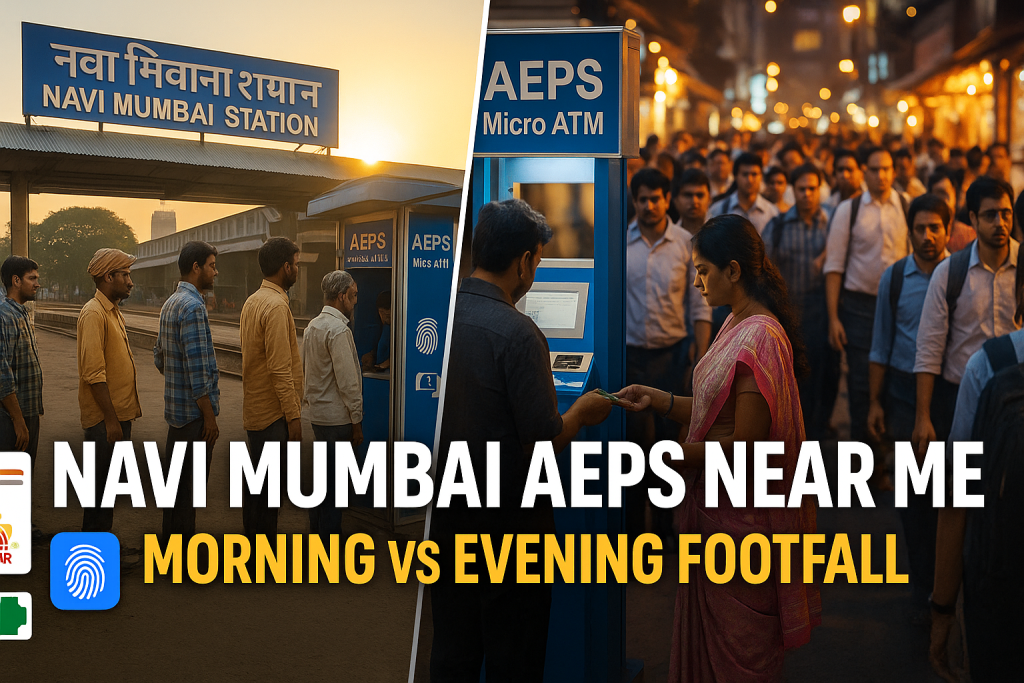

Understanding AEPS and Why Footfall Matters in Navi Mumbai
AEPS allows customers to withdraw cash, check balances, or do basic banking using Aadhaar and biometric authentication. In areas where banking access is limited or queues are long, AEPS becomes the fastest alternative.
However, AEPS is not a “set-and-forget” business.
Your success depends on:
-
Location visibility
-
Customer movement patterns
-
Timing of availability
In Navi Mumbai, footfall is not uniform throughout the day. Morning crowds behave very differently from evening crowds, and AEPS demand shifts accordingly.
Navi Mumbai’s Unique Urban Layout and Customer Behavior
Navi Mumbai is planned, but highly segmented. Each node has a distinct daily rhythm.
Some examples:
-
Vashi, CBD Belapur, Ghansoli – office-heavy zones
-
Panvel, Kharghar, Nerul – mixed residential + commercial
-
Turbhe, APMC, Sanpada – transport and wholesale hubs
Because of this, Navi Mumbai AEPS near me – high-footfall mapping: morning vs evening becomes crucial for identifying peak transaction windows rather than relying on guesswork.
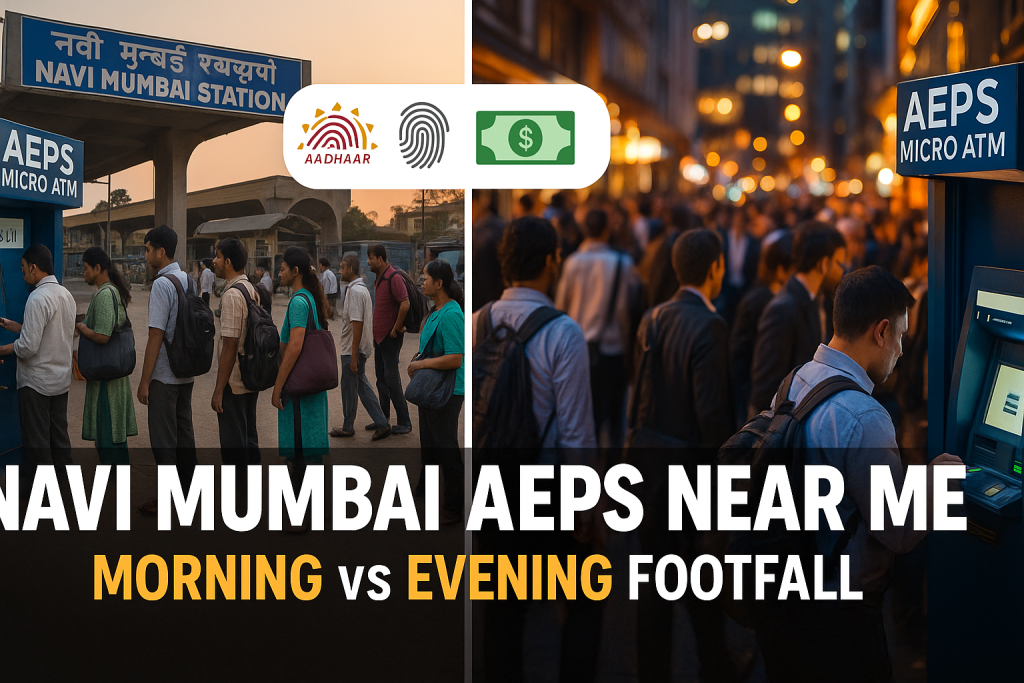
Morning Footfall Patterns (7:00 AM – 12:00 PM)
Morning footfall is driven mainly by necessity, not convenience.
Who Uses AEPS in the Morning?
-
Daily wage workers
-
Construction laborers
-
Vegetable vendors
-
Auto/taxi drivers
-
Senior citizens (bank-related work)
High-Performing Morning AEPS Locations
-
Near bus depots (Vashi, Panvel ST stand)
-
Railway station exits (Sanpada, Nerul, Kharghar)
-
Local markets and mandis
-
Areas near government offices
Transaction Behavior
-
Smaller but frequent withdrawals
-
Balance inquiries
-
Pension and DBT withdrawals
Many BC agents report that 40–50% of their AEPS volume in residential nodes happens before noon. This proves that Navi Mumbai AEPS near me – high-footfall mapping: morning vs evening is not optional—it’s operational strategy.
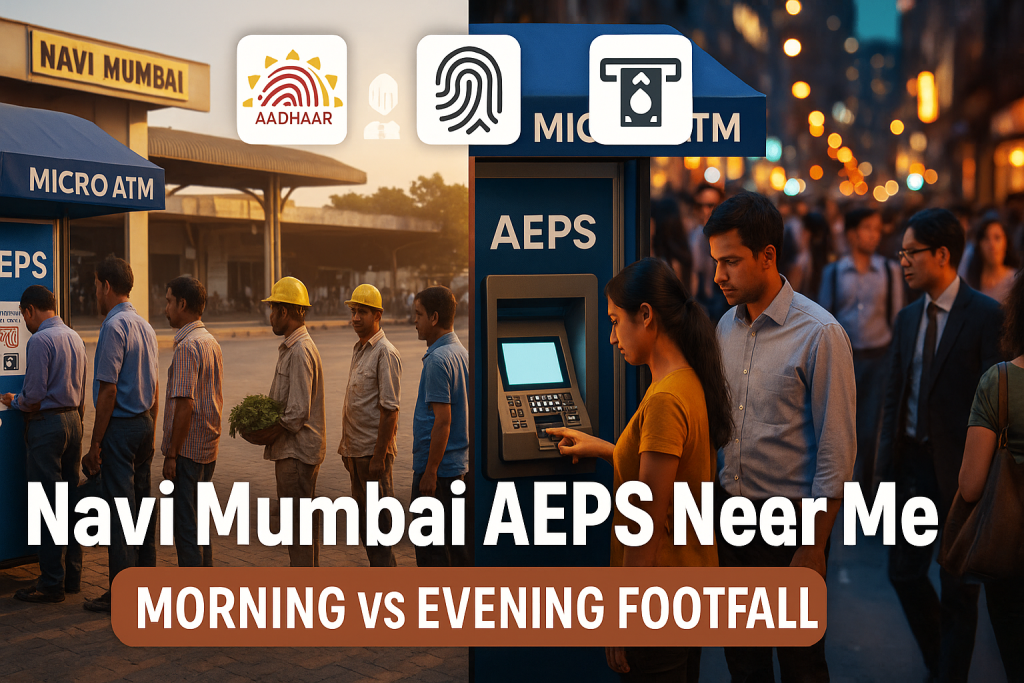
Evening Footfall Patterns (4:30 PM – 9:30 PM)
Evening footfall is driven by convenience and urgency.
Who Uses AEPS in the Evening?
-
Office commuters
-
Small shop owners
-
Gig workers (delivery partners)
-
Migrant workers after shifts
High-Performing Evening AEPS Locations
-
Outside railway stations
-
Near IT parks (Ghansoli, Airoli)
-
Shopping streets and chowks
-
Residential society clusters
Transaction Behavior
-
Larger cash withdrawals
-
Faster service expectations
-
Peak congestion between 6:30–8:30 PM
Agents who stay open late often see higher per-transaction value in the evening, even if transaction count is slightly lower than mornings.
Morning vs Evening: Side-by-Side Comparison
| Factor | Morning | Evening |
|---|---|---|
| Customer intent | Essential needs | Convenience & urgency |
| Avg. transaction size | Lower | Higher |
| Crowd speed | Moderate | Fast & dense |
| Best locations | Markets, stations | Offices, societies |
| Competition | Low–medium | Medium–high |
This table clearly shows why Navi Mumbai AEPS near me – high-footfall mapping: morning vs evening should guide outlet timing and staffing.
Case Study: AEPS Outlet Near Kharghar Station
A BC agent near Kharghar railway station tracked footfall for 30 days.
Findings:
-
Morning (8–11 AM): 55–65 transactions/day
-
Evening (6–9 PM): 35–40 transactions/day
-
Evening withdrawals were 1.8× higher in value
By adjusting staff shifts and cash float accordingly, monthly commission increased by nearly 27%.
This real-world example shows how practical mapping beats assumptions.
How to Do Your Own High-Footfall Mapping
You don’t need expensive tools. Start simple.
Step 1: Observe for 7 Days
Note:
-
Customer count per hour
-
Transaction type
-
Peak rush timings
Step 2: Match with Local Activity
Ask:
-
Is this area office-driven or residential?
-
Are customers rushing or relaxed?
Step 3: Adjust Operations
-
Increase cash before peak hours
-
Add biometric device backup
-
Extend evening hours if viable
Doing this aligns your outlet perfectly with Navi Mumbai AEPS near me – high-footfall mapping: morning vs evening insights.
SEO, Discovery & “Near Me” Searches
People searching “AEPS near me” are usually:
-
In urgent need of cash
-
Already on the street
-
Willing to walk 300–500 meters
Make sure your outlet:
-
Appears on Google Maps
-
Has updated timings
-
Uses signage with “AEPS Available Here”
You can also link internally to guides like “How to start AEPS business in Navi Mumbai” and externally to authoritative resources such as UIDAI and NPCI websites (DoFollow links recommended).
Common Mistakes AEPS Agents Make
-
Opening only during bank hours
-
Ignoring evening commuter traffic
-
Underestimating residential societies
-
Not tracking hourly demand
Avoiding these mistakes instantly improves returns from Navi Mumbai AEPS near me – high-footfall mapping: morning vs evening.
The Bigger Picture: Why Timing Is the New Location
Earlier, location was everything. Today, timing is equally powerful.
A mediocre location with perfect timing often outperforms a premium location with poor availability. In Navi Mumbai’s dynamic environment, understanding people’s daily routines is your biggest competitive advantage.
Conclusion
Navi Mumbai AEPS near me – high-footfall mapping: morning vs evening is not just a trend—it’s a practical framework for anyone serious about AEPS success. By studying when people move, why they transact, and how behavior changes across the day, you can dramatically improve transaction volume, customer satisfaction, and profitability.
If you treat AEPS like a timing-based service rather than a static counter, Navi Mumbai offers enormous untapped potential.
### Frequently Asked Questions (FAQs)
Q1. Is morning or evening better for AEPS in Navi Mumbai?
Both are important. Mornings bring higher transaction counts, while evenings often bring higher-value withdrawals.
Q2. Which areas in Navi Mumbai have the best AEPS footfall?
Railway stations, markets, office zones, and dense residential clusters perform consistently well.
Q3. How many hours should an AEPS outlet stay open?
Ideally 10–12 hours, covering both morning and evening peaks.
Q4. Does AEPS demand change on weekends?
Yes. Weekends often show higher afternoon and evening footfall in residential areas.
Q5. Can footfall mapping increase AEPS commission?
Absolutely. Strategic timing alone can increase monthly earnings by 20–30%.
Disclaimer
This post is made for educational purposes only. If you have any problem with this post or believe it violates ownership or rights, please visit our DMCA page and follow the guide related to removal of content. Readers are advised to independently verify any ownership, compliance, or operational issues related to AEPS before implementation.