In a country as vast and diverse as India, bringing every citizen into the formal financial system has been a monumental challenge. For millions, especially in rural and remote areas, a traditional bank branch is still miles away. This is where the AEPS facility steps in, acting as a silent revolutionizer of financial inclusion. But what exactly is it?
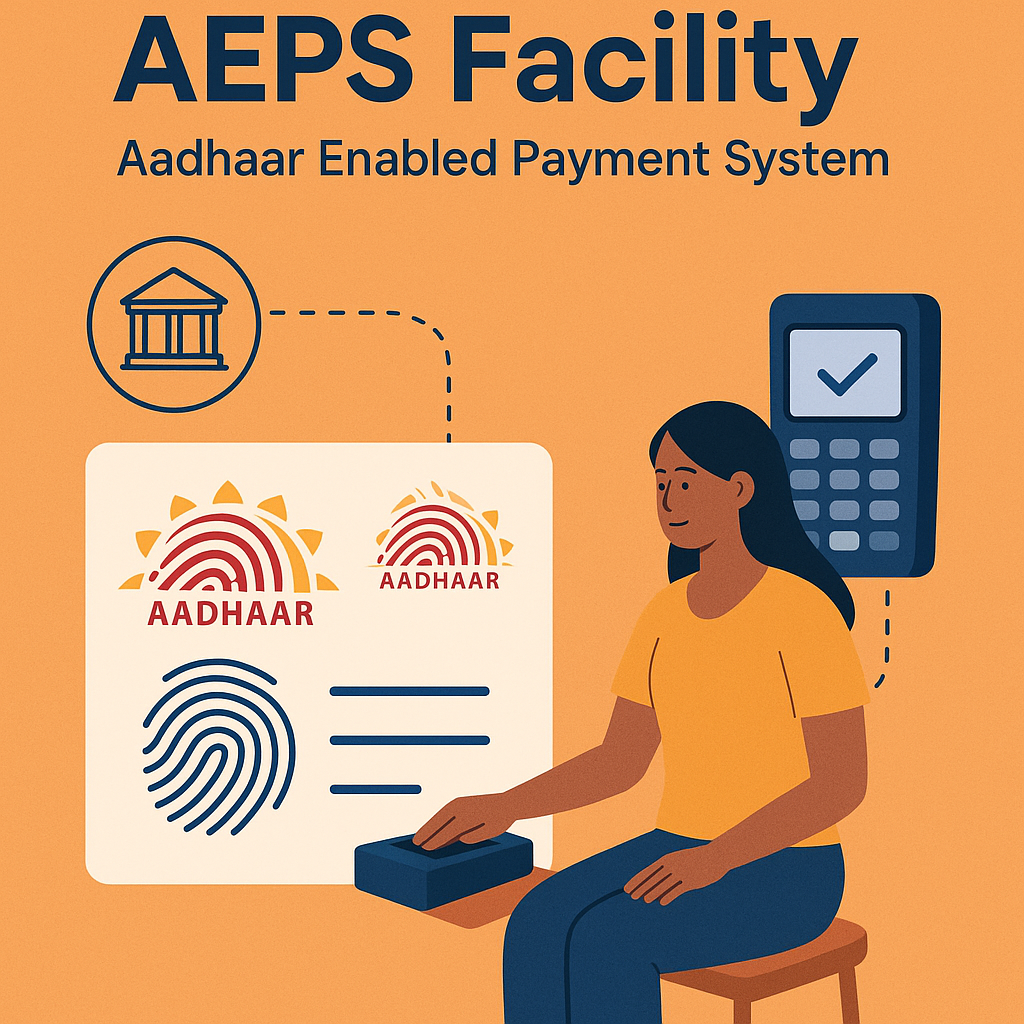
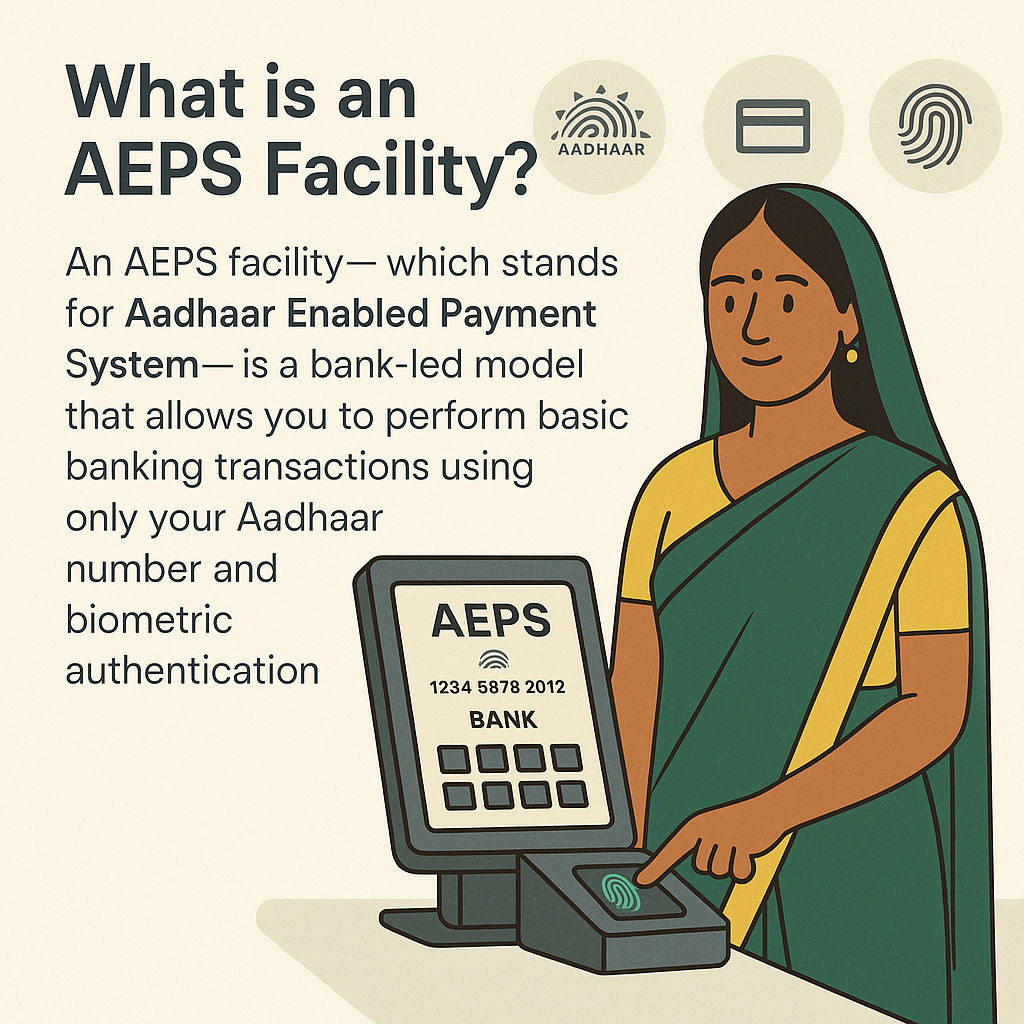
Simply put, an AEPS facility—which stands for Aadhaar Enabled Payment System—is a bank-led model that allows you to perform basic banking transactions using only your Aadhaar number and biometric authentication (fingerprint or iris scan). Think of it as a “bank-in-a-box” that doesn’t need cards, PINs, or even a smartphone. It turns your unique identity into your financial key.
The Engine Behind the AEPS Facility: How Does It Work?
The magic of the AEPS facility lies in its seamless integration of two massive digital infrastructures: India’s banking network and the Unique Identification Authority of India’s (UIDAI) Aadhaar database.
Here’s a step-by-step breakdown of a typical transaction:
-
You Visit a Micro-ATM: You go to a local bank correspondent (or Bank Mitra) who has a micro-ATM—a small, portable device with a biometric scanner.
-
You Choose Your Transaction: You select the service you need: cash withdrawal, balance inquiry, cash deposit, or fund transfer to another Aadhaar-linked account.
-
You Authenticate with Biometrics: You enter your 12-digit Aadhaar number and verify your identity by placing your finger on the scanner.
-
The Secure Handshake: The micro-ATM sends your Aadhaar number and biometric data to the UIDAI for authentication. Once confirmed, UIDAI sends back a “Yes, this is the right person” signal.
-
Transaction Completion: The bank’s system receives this confirmation, processes your requested transaction directly through your Aadhaar-linked bank account, and completes it in real-time.
The entire process is secure, inter-operable (works across different banks), and astonishingly fast, often taking less than a minute.

Core Services Offered by the AEPS Facility
The AEPS facility is designed for simplicity and covers essential banking needs:
-
Cash Withdrawal: The most used service. Withdraw money from your Aadhaar-linked account without a debit card.
-
Balance Inquiry: Instantly check your bank account balance.
-
Cash Deposit: Deposit money directly into your account.
-
Aadhaar to Aadhaar Fund Transfer: Send money to another individual using only their Aadhaar number (provided their bank account is linked to it).
-
Mini Bank Statement: Receive a brief overview of recent transactions.
Why the AEPS Facility is a Game-Changer: Key Benefits
-
Financial Inclusion at Scale: It has been pivotal in bringing banking services to the last mile. As of 2023, over 1.3 billion Aadhaar cards have been issued, and the AEPS network has processed billions of transactions, proving its massive reach. A report by the World Bank has often cited India’s digital infrastructure, including Aadhaar-based systems, as a key driver in increasing account ownership.
-
Simplicity and Accessibility: It requires no digital literacy beyond remembering one’s Aadhaar number. The biometric authentication is intuitive and inclusive for the elderly or those less comfortable with technology.
-
Enhanced Security: Biometric authentication is far more secure than signatures or even PINs, which can be forgotten, stolen, or forged. It ensures the actual beneficiary is present for the transaction.
-
Cost-Effective for Banks: It reduces the need for expensive physical branch infrastructure in low-volume areas, allowing banks to serve customers through low-cost correspondent networks.
Real-World Impact: Case in Point
Consider a farmer in a village in Uttar Pradesh. Before AEPS, collecting her pension meant a day-long trip to the nearest town, losing a day’s wages, and paying for transport. Now, a banking correspondent sets up a micro-ATM at the village panchayat office every month. She walks over, provides her fingerprint, and withdraws her pension instantly, safely, and without any hassle. This is the transformative power of the AEPS facility in action.
Challenges and Considerations
No system is perfect, and the AEPS model faces its own set of challenges:
-
Biometric Failures: Dirty fingers, worn-out fingerprints from manual labor, or poor internet connectivity can sometimes lead to authentication failures.
-
Dependence on Banking Correspondents: The system’s health relies heavily on the reliability and honesty of the last-mile agents.
-
Limited Transaction Scope: It is designed for basic transactions and cannot replace the full suite of services offered by internet banking or ATMs.
-
Privacy Concerns: Some activists have raised concerns about data privacy and the potential for profiling, given the centralization of identity and financial data.
The Future of the AEPS Facility
The AEPS facility is evolving. The National Payments Corporation of India (NPCI), which operates the system, is continuously working on improvements. We are seeing the emergence of Aadhaar Pay, where merchants can accept payments directly into their bank accounts using a customer’s biometrics. Integration with other platforms and strengthening the reliability of authentication are key focus areas.
Furthermore, the principles of AEPS are inspiring similar digital public infrastructure models in other countries looking to leapfrog traditional banking challenges.
Frequently Asked Questions (FAQs)
1. Do I need to have a bank account to use AEPS?
Yes, absolutely. The AEPS facility is a channel to access your existing bank account. Your bank account must be linked with your Aadhaar number for the system to work.
2. Is AEPS free to use?
While NPCI sets the interchange fees that banks pay each other, the end-user is generally not charged for basic AEPS services like balance inquiry. For cash withdrawals, some banking correspondents may charge a small fee, but this is not mandated by the system itself.
3. What if my fingerprint is not recognized?
You can try with another finger. If biometric authentication consistently fails, you should update your biometric data at an Aadhaar enrollment center. As a fallback, some transactions may allow an Aadhaar-based OTP (One-Time Password) sent to your registered mobile number.
4. Can I link multiple bank accounts to Aadhaar for AEPS?
Yes, you can link multiple bank accounts to your Aadhaar. However, for AEPS transactions, you must select one of these linked accounts as your “primary” account with the bank correspondent at the time of the transaction.
5. How is AEPS different from UPI?
Both are digital payment systems. The key difference is the authentication method. AEPS uses Aadhaar and biometrics and is typically agent-assisted. UPI (Unified Payments Interface) uses a Virtual Payment Address (VPA like name@bank) and a mobile PIN, and is user-driven on a smartphone. AEPS is often for those without smartphones, while UPI is for the digitally savvy.
Conclusion
The AEPS facility is far more than a technical payment protocol. It is a foundational pillar of India’s digital economy, embodying the principle of using technology for social good. By bridging the gap between identity and finance, it has empowered millions, ensuring that the benefits of the formal banking system flow to every corner of the nation. While it continues to evolve and address its limitations, its role in democratizing access to money has already cemented its place as a quiet but profound revolution in the way India banks.
Disclaimer: This article is for educational and informational purposes only. The features and regulations concerning the AEPS facility are subject to change as per guidelines from the National Payments Corporation of India (NPCI) and the Reserve Bank of India (RBI). Readers are advised to consult their bank or official NPCI resources for the most current and accurate information. If you have any concerns regarding the content of this post, please refer to the DMCA policy and takedown guide available on this website for resolution of ownership or other related issues.