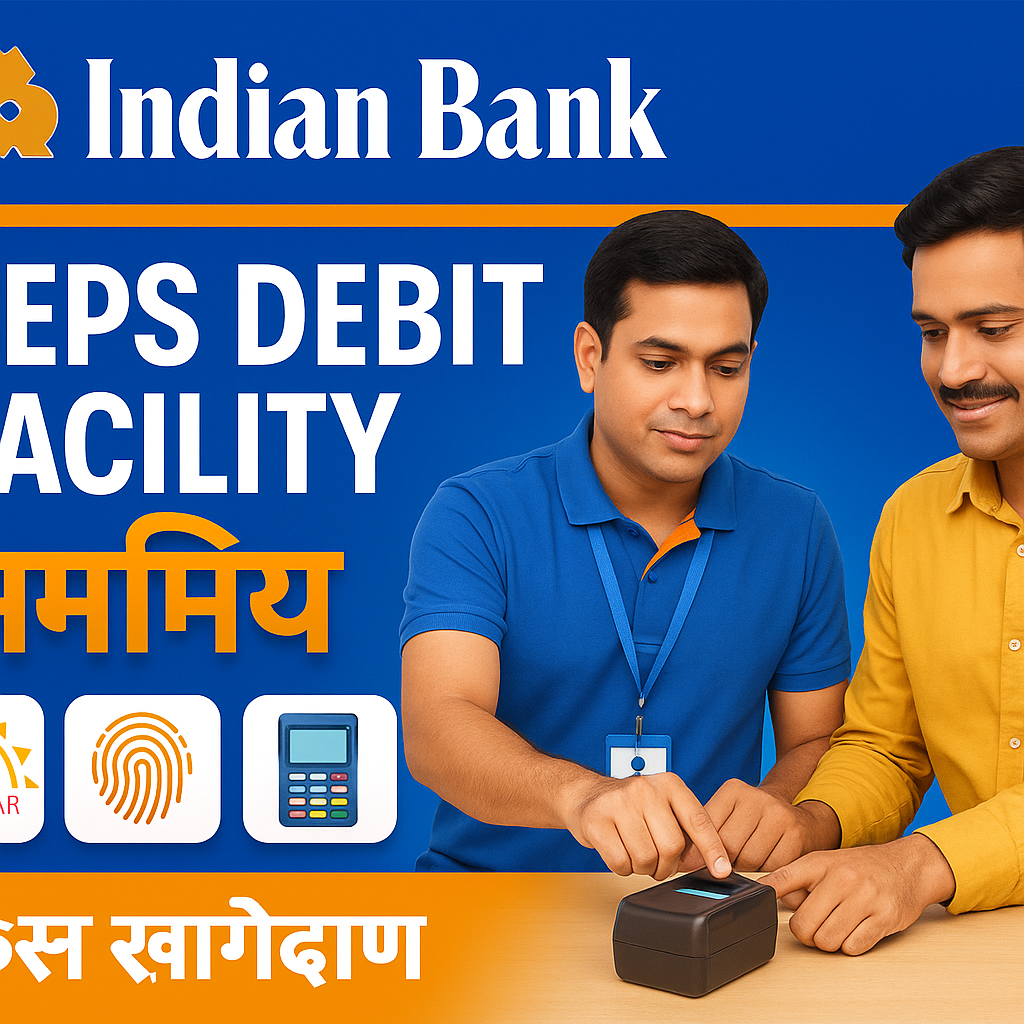
Aeps debit facility in Indian bank is one of the most important digital banking services helping millions of people access their money easily, especially in rural and semi-urban areas. In this article, we will explore what the facility actually means, how it works, why it matters, and how customers can use it safely. This is a detailed, human-written explanation designed to give you complete clarity.

1. What Is AEPS?
AEPS stands for Aadhaar Enabled Payment System. It is a secure payment method developed by the National Payments Corporation of India (NPCI) that allows customers to perform basic banking transactions using:
-
Aadhaar number
-
Bank name
-
Fingerprint authentication
No ATM card, no cheque book, and no signature are required—just Aadhaar and biometric verification.
AEPS helps bridge the banking gap in areas where ATM networks or full-service bank branches are limited.
2. What Is the Aeps Debit Facility in Indian Bank?
The Aeps debit facility in Indian bank refers to the option for Indian Bank customers to withdraw money from their bank account using AEPS at any nearby Bank Mitra, Customer Service Point (CSP), Micro-ATM, or Aadhaar banking center
3. How the AEPS Debit Process Works
Here’s a clear step-by-step breakdown of how the aeps debit facility in Indian bank works:
-
Customer visits a nearby CSP / Bank Mitra.
-
The operator selects AEPS Withdrawal.
-
Customer provides:
-
Aadhaar number
-
Indian Bank account selection
-
-
Fingerprint is scanned through a biometric device.
-
System verifies details using UIDAI servers.
-
Funds are debited instantly from the Indian Bank account.
-
Customer receives a printed receipt or SMS confirmation.
It is a smooth 30-second process powered by UIDAI and NPCI.
4. Key Features & Benefits
The AEPS debit facility offers several advantages:
✔ Card-less Withdrawal
Ideal for customers who don’t use or often lose their ATM cards.
✔ Supports Financial Inclusion
AEPS is widely used across rural India, where traditional banking infrastructure is limited.
✔ Instant Transactions
Money is debited in real time, and an SMS alert is sent immediately.
✔ Interoperability
An Indian Bank customer can withdraw money from any bank’s AEPS-enabled CSP.
✔ Cost-Effective
Transactions are often free or have minimal charges depending on the service provider.
✔ Easy for Senior Citizens
No PIN, card, or forms required—just biometric verification.
5. Real-Life Example of AEPS Debit
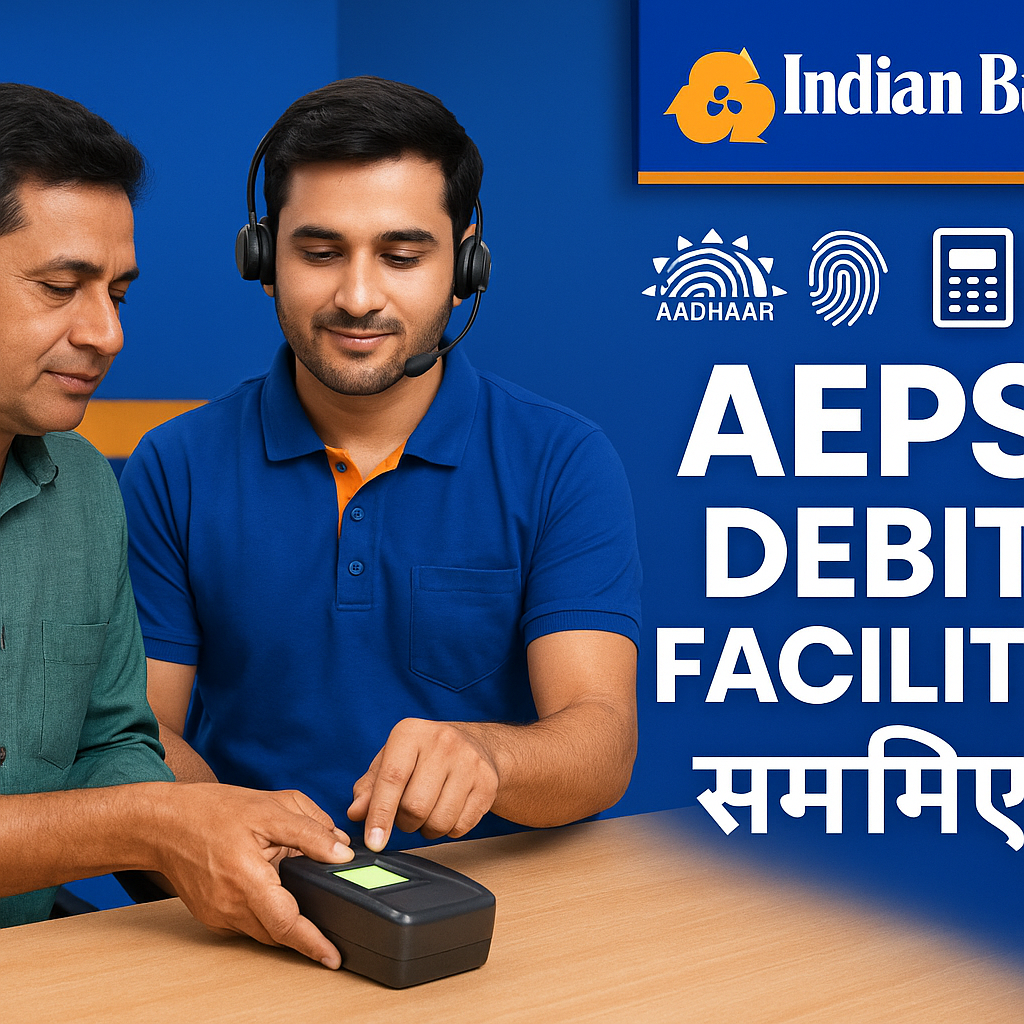
Imagine Sita Devi, a farmer from a small village in Rajasthan. She doesn’t own a smartphone and the nearest ATM is 20 km away.
Instead of travelling long distances, she visits the local CSP at her village:
-
She gives her Aadhaar number
-
Verifies her identity with a fingerprint
-
Withdraws ₹2,000 from her Indian Bank account within seconds
This simple system helps millions like her access their own money with ease.
6. Charges, Limits & Security Measures
Transaction Limits
Indian Bank follows NPCI rules:
-
Daily withdrawal limit (varies): ₹10,000 – ₹25,000 depending on the CSP
-
Per-transaction limit: ₹10,000
Charges
-
CSPs may charge a small commission (₹5–₹15), but bank does not charge customers for AEPS withdrawal.
Security Measures
-
Biometric authentication ensures high security
-
UIDAI encrypted servers protect customer identity
-
Merchant device logs every transaction
-
Instant SMS alerts help customers track activity
7. AEPS vs ATM Withdrawal
| Feature | AEPS Withdrawal | ATM Withdrawal |
|---|---|---|
| Uses Aadhaar | Yes | No |
| Uses ATM Card | No | Yes |
| Requires PIN | No | Yes |
| Works in rural areas | Excellent | Limited |
| Tech requirement | Biometric device | ATM |
| Speed | Fast | Fast |
AEPS is ideal when a card is lost, damaged, or inaccessible.
8. Challenges & Future Scope
Challenges
-
Occasional biometric mismatch
-
Connectivity issues in remote locations
-
Lack of awareness among new users
Future Enhancements
-
Face authentication (UIDAI is testing)
-
Wider CSP availability
-
Faster multi-bank settlement systems
NPCI’s plan is to make AEPS stronger and faster, ensuring deeper financial inclusion.
9. Useful Links
External (DoFollow) Resources
-
NPCI AEPS Page: https://www.npci.org.in
-
UIDAI Aadhaar Services: https://uidai.gov.in
Internal Links (Suggestions for your website)
-
What is Aadhaar Pay?
-
How to open an Indian Bank account online
-
Difference between UPI and AEPS
10. Frequently Asked Questions (FAQs)
1. What is the aeps debit facility in Indian bank?
It is a service that allows Indian Bank customers to withdraw money using Aadhaar and fingerprint authentication at any AEPS-enabled outlet.
2. Do I need an ATM card for AEPS?
No. AEPS works only with Aadhaar verification.
3. Is AEPS safe?
Yes. It uses UIDAI-based biometric verification and NPCI’s secure network.
4. How much money can I withdraw using AEPS?
Generally up to ₹10,000 per transaction. Limits may vary depending on CSP rules.
5. Can I check my Indian Bank balance using AEPS?
Yes, AEPS also supports balance inquiry, mini statement, and money transfer.
6. What if my fingerprint does not match?
You may need to try again or update your biometrics at an Aadhaar center.
11. Conclusion
The aeps debit facility in Indian bank is a powerful service that offers convenient, card-less, and secure withdrawals to millions of customers across India. It is especially useful in rural areas where banks or ATMs are not easily accessible. By enabling customers to access their money quickly with just Aadhaar and biometric verification, Indian Bank supports India’s financial inclusion mission.
If you want simple, secure, and instant access to your funds—no matter where you live—AEPS makes it possible.
Disclaimer
This article is created for educational purposes only. If you have any concern with this content, please visit the DMCA page on this website and follow the removal guidelines. Make sure to verify ownership or any related issues before requesting content removal.