When we talk about financial inclusion in India, AEPS Transaction stands out as one of the most impactful innovations of the past decade. Within just 10–15 words, here is the short description: AEPS Transaction is a bank-led model that allows basic banking services using Aadhaar authentication.
In this article, we will dive deep into how AEPS works, why it matters, real-life examples, benefits, limitations, and everything else you need to know to understand this powerful tool. The goal is to AEPS Transaction present the subject in a simple yet expert way that feels human and engaging.
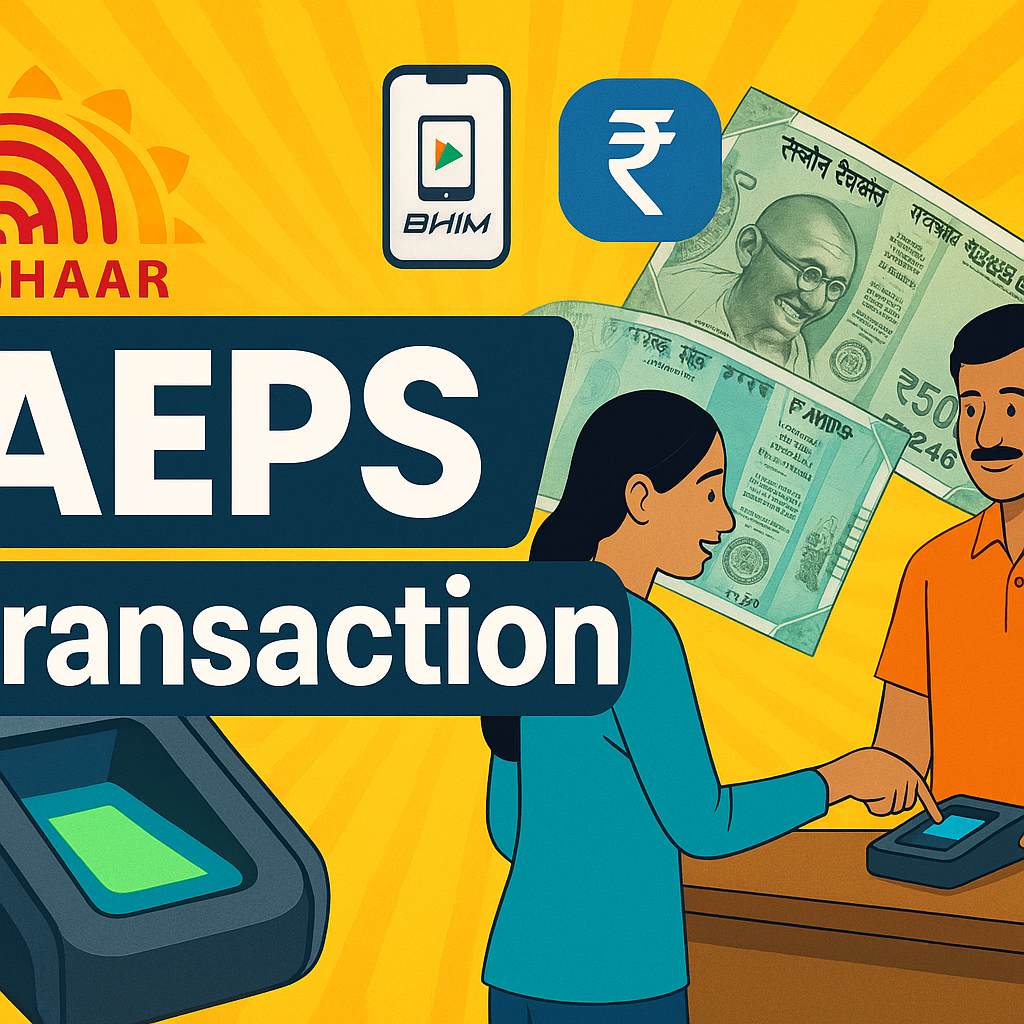

1. What Is AEPS Transaction?
An AEPS Transaction refers to any digital financial transaction carried out using the Aadhaar Enabled Payment System. In simple terms, it allows customers to access basic banking services through their Aadhaar number and biometric authentication—usually fingerprint or iris scan.
The system is developed by the National Payments Corporation of India (NPCI) to promote financial inclusion, especially in rural and semi-urban areas. Unlike debit cards or mobile apps, AEPS doesn’t require a smartphone, ATM card, or internet connection for users.
2. How AEPS Works
AEPS operates on a straightforward mechanism:
-
The customer visits an AEPS-enabled shop/banking correspondent.
-
Provides their Aadhaar number and selects their bank.
-
The agent enters the details into the AEPS device.
-
Customer verifies identity by fingerprint or iris scan.
-
The transaction is completed through NPCI’s secure Aadhaar-based network.
Behind this simple process, NPCI verifies the Aadhaar data with UIDAI, checks bank account details, and authorizes the transaction—all within seconds.
3. Key Services Available Through AEPS
AEPS supports several core banking operations:
-
Cash Withdrawal
-
Cash Deposit
-
Balance Inquiry
-
Mini Statement
-
Aadhaar to Aadhaar Fund Transfer
-
Bank Account Linking and Verification
This makes AEPS a reliable banking channel, especially where bank branches or ATMs are unavailable.
4. Real-World Example of an AEPS Transaction
Imagine Rakesh, a farmer from a small village in Rajasthan, who needs cash but the nearest ATM is 20 km away. Instead of traveling, he walks to a nearby kirana shop offering AEPS services.
He provides his Aadhaar number, selects his bank (SBI), and verifies his identity using his fingerprint. Within seconds, he receives his cash. The shopkeeper earns a small commission, and Rakesh saves both time and travel cost.
This example shows how AEPS empowers rural populations and supports financial accessibility.
5. Benefits of AEPS
1. Convenience
People can withdraw money in their own village without needing ATM/debit cards.
2. Secure
Biometric verification makes fraud difficult.
3. Inclusive
Millions without smartphones or digital banking knowledge can still use basic financial services.
4. Low Infrastructure
Only an Aadhaar-enabled device and internet are needed—ideal for retailers.
5. Support for Government Schemes
Welfare beneficiaries can withdraw DBT (Direct Benefit Transfer) subsidies easily.
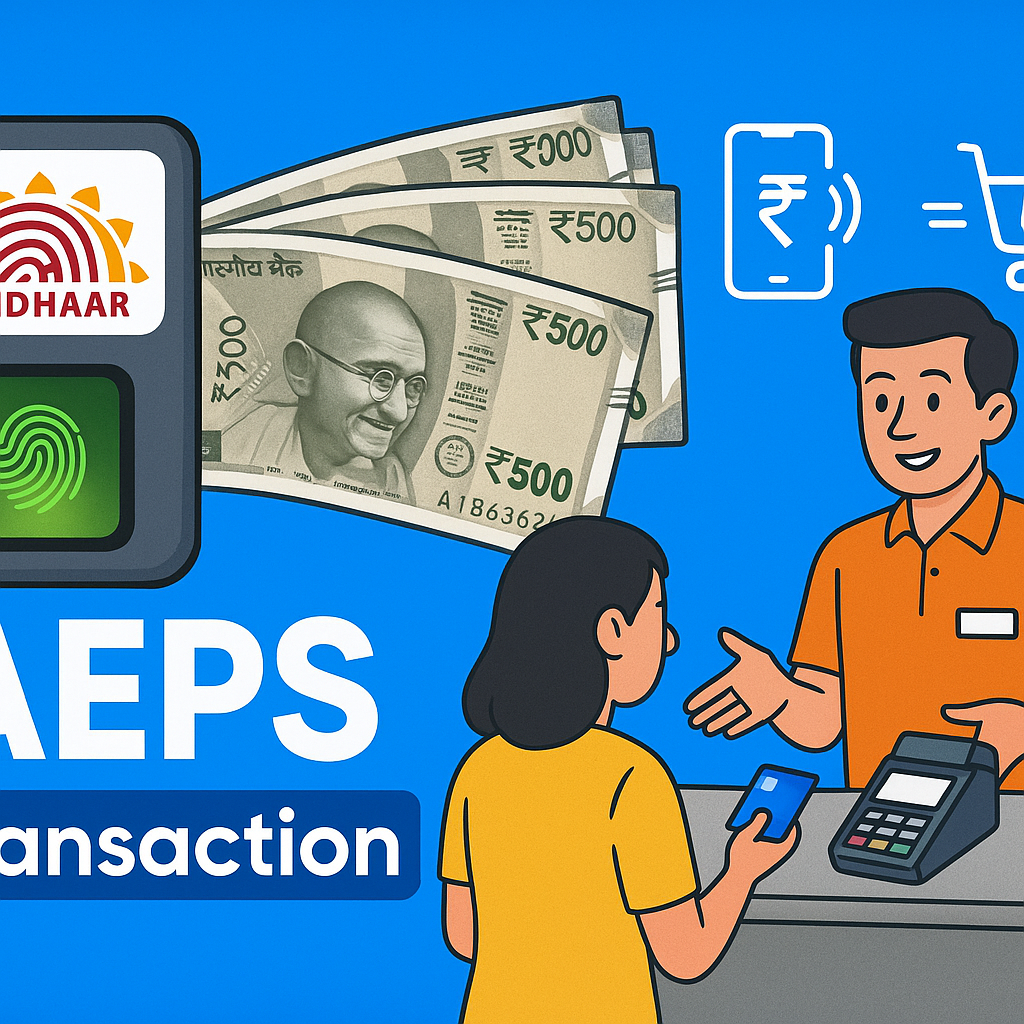
6. Challenges and Limitations
Despite its advantages, AEPS also faces issues:
-
Biometric failures due to worn-out fingerprints (common among laborers).
-
Network issues in remote areas.
-
Dependence on Aadhaar authentication, making it sensitive to UIDAI server downtime.
-
Daily transaction limits vary by bank and service provider.
Even with these challenges, AEPS continues to grow across India.
7. AEPS vs UPI vs Traditional Banking
| Feature | AEPS | UPI | ATM/Traditional |
|---|---|---|---|
| Requires Smartphone | No | Yes | No |
| Requires Internet | Minimal | Yes | No |
| Authentication | Biometric | PIN | Card + PIN |
| Ideal For | Rural users | Smartphone users | All |
UPI is great for digital payments, while AEPS excels in cash-based rural environments.
8. Security Features of AEPS
-
Biometric authentication provides a strong identity check.
-
End-to-end encryption by NPCI ensures data safety.
-
Transaction logs are stored securely for auditing.
-
Aadhaar masking for privacy protection.
This makes AEPS one of the safest banking methods today.
9. How to Start AEPS as a Retailer
To become an AEPS agent/retailer, you must:
-
Register with a bank CSP, fintech company, or AEPS provider.
-
Provide KYC documents (PAN, Aadhaar, bank proof).
-
Get a biometric device like Mantra MFS100 or Morpho.
-
Complete training and activation.
Retailers earn commissions per transaction, making it a good micro-entrepreneurship opportunity.
10. Future of AEPS in India
AEPS is expected to grow further due to:
-
Increased rural digitization
-
Government initiatives for cashless services
-
Integration with micro-ATMs and future biometric technologies
-
Expansion of DBT and subsidy-based transactions
According to NPCI, AEPS handles hundreds of millions of transactions every month, proving its crucial role in India’s banking ecosystem.
11. External and Internal Links (SEO Suggestions)
Here are suggested resources you can add as DoFollow external links:
-
NPCI Official Page – https://www.npci.org.in
-
UIDAI Aadhaar Portal – https://uidai.gov.in
Internal links (add according to your website):
-
Link to your post on “UPI Payments”
-
Link to your post on “How to Become a CSP Agent”
12. Frequently Asked Questions (FAQs)
1. What is an AEPS Transaction?
An AEPS Transaction is a banking transaction done using Aadhaar number and biometric verification.
2. Is AEPS safe?
Yes, it uses biometric authentication and NPCI’s secure payment network.
3. What services can I access through AEPS?
Cash withdrawal, deposit, balance check, mini statements, and Aadhaar-to-Aadhaar transfers.
4. Do I need a bank account for AEPS?
Yes, your Aadhaar must be linked to a bank account.
5. Is there a transaction limit?
Yes, limits vary by bank or service provider (typically ₹10,000–₹50,000 daily).
6. Can AEPS be used without Aadhaar?
No, Aadhaar and biometric authentication are mandatory.
Conclusion
AEPS Transaction is more than just a payment system—it is a revolutionary tool that brings banking to the fingertips of millions, especially in remote parts of India. With its simplicity, security, and wide reach, AEPS bridges the gap between traditional banking and India’s digital future.
Whether you’re a customer, retailer, or someone curious about financial technology, AEPS remains one of the most important pillars in India’s digital payment ecosystem.
Disclaimer
This post is made for educational purposes only. If you have any issue with this content, please visit the DMCA page on this website and review the removal guidelines. You may need to verify ownership or address related concerns regarding this post.