(SEO Meta Description after 10–15 words with focus keyword highlighted)
After understanding digital banking in India, you must know about AEPS—a secure Aadhaar-based payment system that allows people to access essential banking services without cards or signatures.
What Is AEPS?
AEPS (Aadhaar Enabled Payment System) is a digital banking facility introduced by the National Payments Corporation of India (NPCI). It allows customers to perform basic banking transactions using their Aadhaar number and biometric authentication—usually a fingerprint—through a micro-ATM or a banking agent.
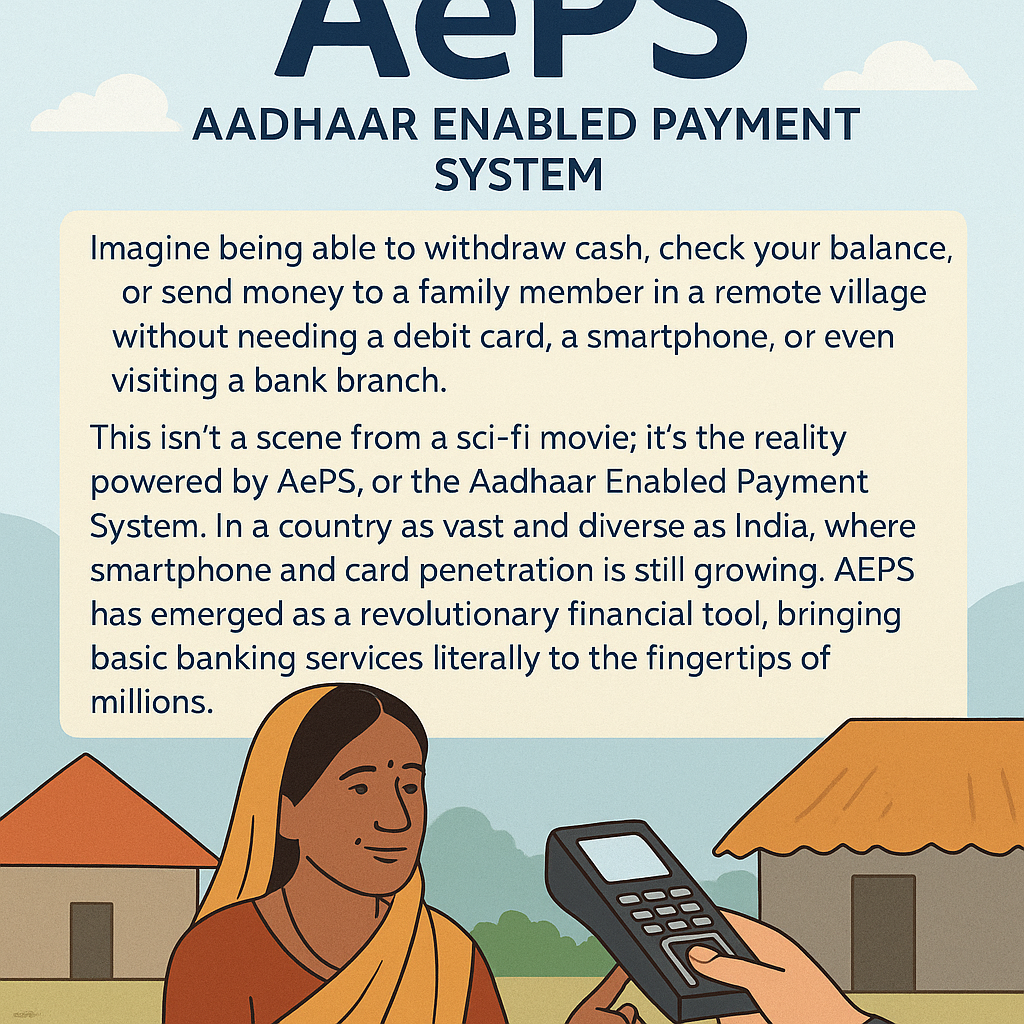
In simple terms, AEPS lets people withdraw money, check balances, and transfer funds without needing a debit card, passbook, or even a smartphone.
This system was designed especially to support rural and remote communities where traditional banking infrastructure is limited.
To learn more, you may visit reliable resources like NPCI’s official page (https://www.npci.org.in) and UIDAI (https://uidai.gov.in).

How AEPS Works
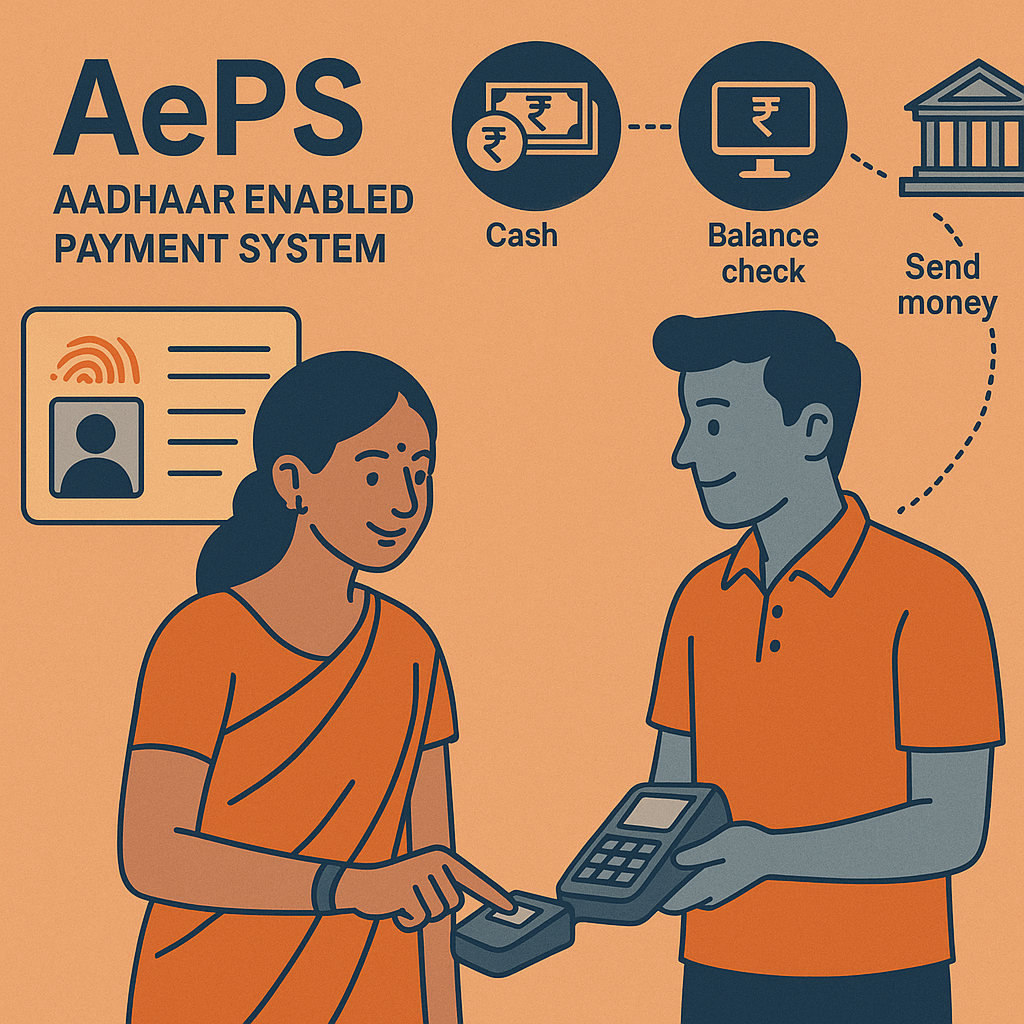
AEPS operates through a network of micro-ATMs and banking correspondents (BCs). Here’s how the system functions:
-
Customer visits an AEPS agent (bank mitra or BC).
-
Provides their Aadhaar number and selects the type of transaction.
-
Authenticates using fingerprint or iris scan.
-
The agent’s device connects to UIDAI and NPCI.
-
Transaction is completed instantly, and the customer receives a receipt.
Because AEPS uses biometric verification, it is more secure than PIN-based systems, especially for users who are not familiar with digital banking.
Services Available Through AEPS
AEPS supports a range of basic financial services:
-
Cash Withdrawal
-
Cash Deposit
-
Balance Enquiry
-
Aadhaar to Aadhaar Fund Transfer
-
Mini Statement
-
e-KYC Services
With these features, AEPS plays a crucial role in financial inclusion.
Benefits of AEPS
1. Easy Access to Banking
People in rural or low-connectivity areas can access basic banking through local agents.
2. No Card or PIN Required
AEPS uses Aadhaar and biometrics, reducing reliance on debit cards.
3. Secure and Verified
Biometric authentication reduces fraud and identity theft.
4. Helps Promote Digital India
AEPS is part of India’s financial digital infrastructure, boosting cashless transactions.
5. Interoperability
You can use AEPS with any bank linked to Aadhaar and NPCI.
Limitations and Challenges
While AEPS is powerful, it has some challenges:
-
Biometric errors: Fingerprint mismatches, especially among elderly or manual-labor workers.
-
Connectivity issues: Rural areas may face network problems.
-
Fraud risks: Though lower, scams still exist, especially if agents misuse data.
-
Aadhaar linking mandatory: Users must have their Aadhaar linked to their bank account.
Real-Life Examples & Case Studies
Case Study: Rural Villages in Rajasthan
In many villages, AEPS emerged as the primary banking method during the COVID-19 lockdown. Local agents became essential for pension withdrawals and government scheme disbursements.
Case Study: Financial Inclusion Boost
NPCI reported that AEPS transactions crossed over 250 million monthly transactions in some years, proving its widespread adoption.
Who Can Use AEPS?
Anyone who meets these criteria:
-
Has an Aadhaar number
-
Has a bank account linked with Aadhaar
-
Wants to access basic banking without a card or phone
AEPS is especially beneficial for:
-
Rural households
-
Elderly people
-
People without smartphones
-
Labourers or daily wage workers
AEPS vs Other Payment Systems
| Feature | AEPS | UPI | Debit Card |
|---|---|---|---|
| Authentication | Biometrics | PIN/UPI PIN | PIN |
| Smartphone Required? | No | Yes | No |
| Major Use | Basic banking | Digital payments | ATM withdrawals |
| Target Users | Rural/low-tech | Smartphone users | General users |
AEPS complements systems like UPI by serving groups where smartphones or internet access are limited.
How AEPS Helps Rural India
AEPS is one of the strongest tools for financial inclusion. It brings banking to remote locations through local agents. Instead of traveling long distances to bank branches, villagers can withdraw cash at nearby shops.
This system has helped lakhs of people receive government subsidies, pensions, and social benefits quickly and securely.
Conclusion
AEPS has transformed how millions of Indians access banking. By combining Aadhaar authentication with digital infrastructure, it bridges the gap between formal banking systems and underserved populations. While challenges remain, AEPS continues to be a cornerstone of India’s digital financial ecosystem, ensuring that banking is not a privilege but a basic right.
Frequently Asked Questions (FAQs)
1. What is AEPS?
AEPS is the Aadhaar Enabled Payment System that allows banking transactions using Aadhaar and biometrics.
2. Is AEPS safe?
Yes. AEPS uses biometric authentication, making it secure and hard to misuse.
3. Can I use AEPS without linking Aadhaar to my bank account?
No. Aadhaar-bank linking is mandatory.
4. What services can I use through AEPS?
Cash withdrawal, balance enquiry, deposits, mini statements, fund transfers, and more.
5. Does AEPS require a smartphone?
No. Transactions work through micro-ATMs and agents.
6. Can AEPS be used for government benefits?
Yes. Many welfare schemes and subsidies are delivered via Aadhaar-linked accounts, which can be accessed using AEPS.
Disclaimer
This post is created for educational purposes only. If you have any issue with this content, please visit the DMCA page on the site and review the removal guidelines. You must verify ownership or any related issues before requesting removal.