Aeps debit facility is one of the most revolutionary innovations in India’s digital banking landscape, and within just a few years, it has changed how millions of people access money. Aeps Debit Facility Built on Aadhaar authentication, AEPS (Aadhaar Enabled Payment System) has made banking more inclusive, secure, and accessible—particularly for rural and semi-urban areas where traditional banking infrastructure is limited.
In this in-depth guide, we’ll break down what the aeps debit facility is, how it works, who can use it, its benefits, real examples, limitations, and why it matters for India’s push toward digital finance.
Table of Contents
-
What Is AEPS?
-
What Is the Aeps Debit Facility?
-
How the Aeps Debit Facility Works
-
Key Features of Aeps Debit Facility
-
Benefits for Customers & Businesses
-
Real-Life Example: AEPS in Rural India
-
AEPS vs Other Payment Methods
-
Risks and Limitations
-
How to Use AEPS Safely
-
External & Internal Resource Suggestions
-
Frequently Asked Questions (FAQs)
-
Conclusion
-
Disclaimer

1. What Is AEPS?
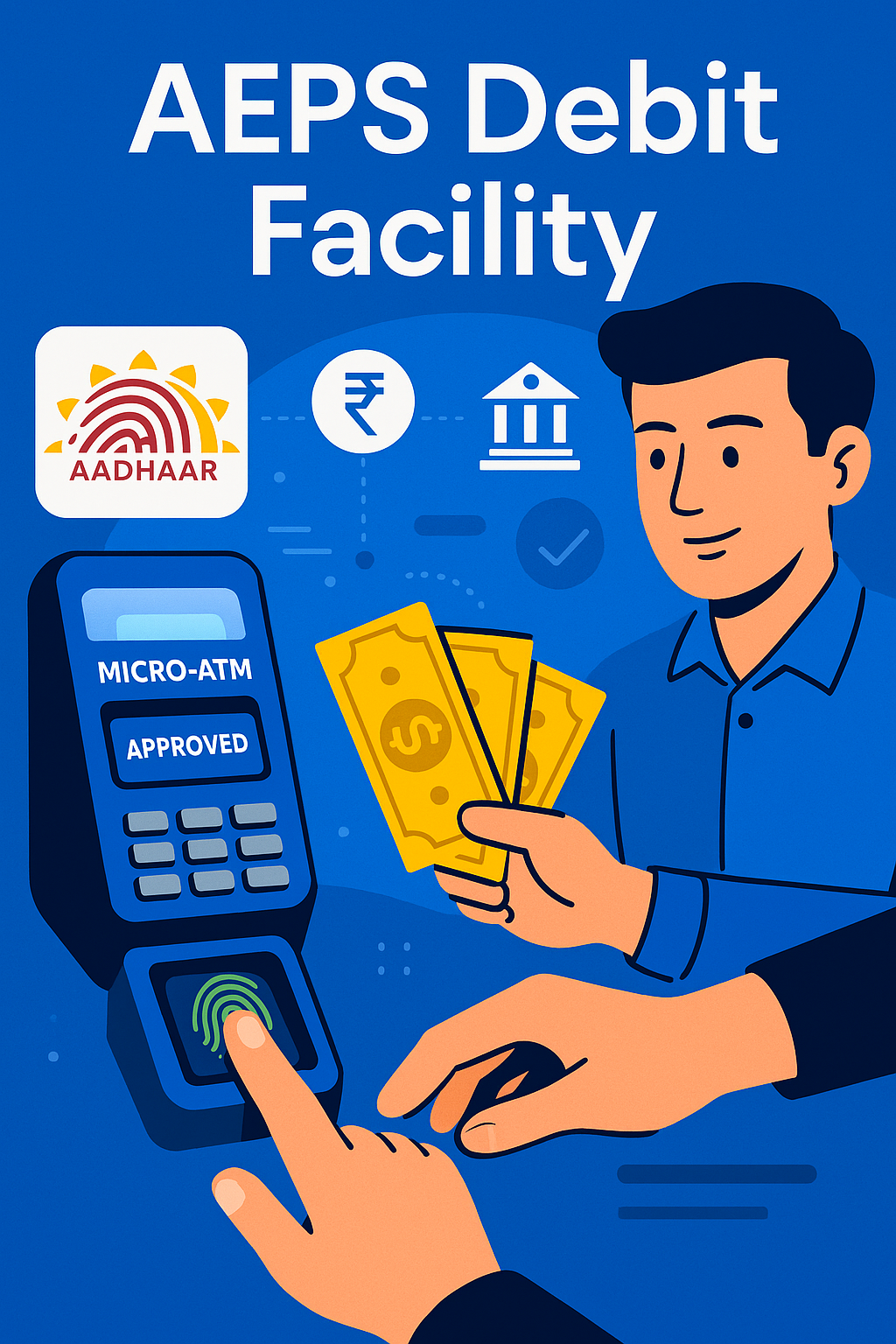
The Aadhaar Enabled Payment System (AEPS) is an RBI-approved payment method that allows customers to perform basic banking transactions using just their Aadhaar number and biometric authentication.
It works through micro-ATMs typically operated by banking correspondents (BCs), CSC centers, kirana shops, and small merchants.
AEPS enables:
-
Cash withdrawal
-
Cash deposit
-
Balance enquiry
-
Aadhaar-to-Aadhaar fund transfer
-
Mini statement
-
Authentication services
2. What Is the Aeps Debit Facility?
The aeps debit facility allows customers to withdraw cash directly from their bank accounts using only their Aadhaar number and fingerprint, without needing an ATM card, passbook, or smartphone.
In simple words:
AEPS debit facility = Cash withdrawal using Aadhaar + Fingerprint at a micro-ATM.
This facility is especially beneficial for people who:
-
Don’t have ATM cards
-
Don’t use smartphones
-
Live in remote areas with limited bank branches
-
Need immediate access to cash
Banks only need to verify the Aadhaar number and match the fingerprint stored in UIDAI’s database. Once authenticated, the system debits the customer’s bank account.
3. How the Aeps Debit Facility Works
Here’s a step-by-step breakdown of how AEPS debit works:
-
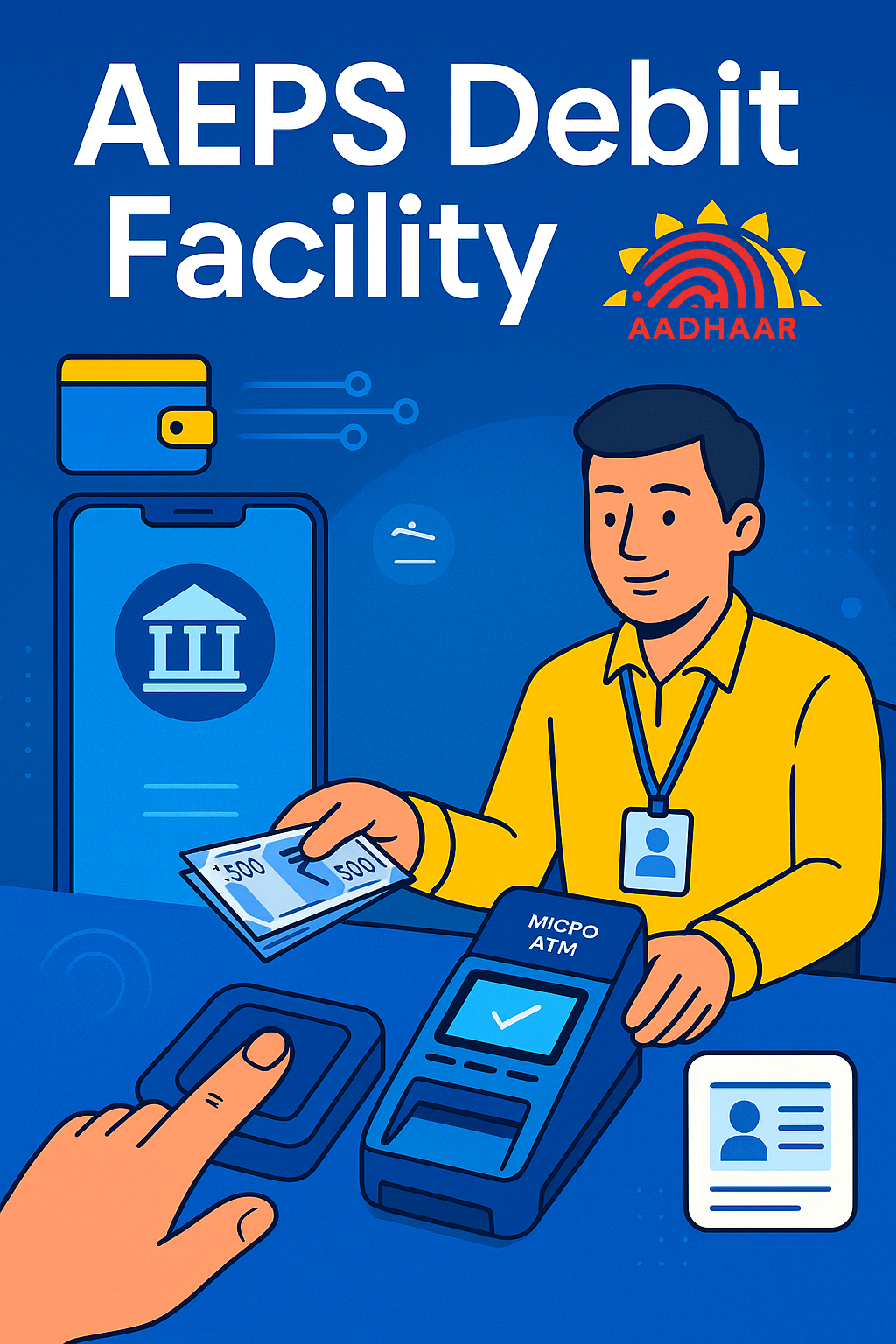
The customer visits an AEPS agent or micro-ATM operator.
-
The agent enters the customer’s:
-
Aadhaar number
-
Bank name
-
-
The customer selects “Cash Withdrawal.”
-
The micro-ATM prompts for biometric verification.
-
The customer provides fingerprint scanning.
-
The system verifies the fingerprint through UIDAI.
-
The withdrawal request is sent to the customer’s bank.
-
The cash is given instantly after bank confirmation.
-
The customer receives an SMS notification (if mobile number is linked).
The simplicity of this process makes aeps debit facility one of the fastest and most inclusive financial tools in India.
4. Key Features of Aeps Debit Facility
Here are the standout features:
-
No need for ATM cards or PINs
-
Biometric-based security reduces fraud
-
Accessible even in remote villages
-
Real-time cash withdrawal through micro-ATMs
-
Low transaction cost
-
Works across most major banks in India
-
Enabled through NPCI (National Payments Corporation of India)
5. Benefits for Customers & Businesses
Benefits for Customers
-
Convenience: No ATM card required
-
Accessibility: Works in places where ATMs don’t exist
-
Security: Fingerprint-based authentication reduces risk
-
Speed: Withdraw money in less than a minute
-
Universal Access: Any bank account linked with Aadhaar is supported
Benefits for Retailers and Agents
-
Earn attractive commissions per transaction
-
Increased footfall for shops and CSC centers
-
Low setup cost
-
Helps build trust within the local community
-
Opportunities to cross-sell financial services
6. Real-Life Example: AEPS in Rural India
A great example is from a small village in Madhya Pradesh where local banking correspondent centers performed more than 2,000 AEPS withdrawals every month.
Most villagers do not have ATMs nearby—the closest bank is 18 km away.
But with the aeps debit facility, they now withdraw money at kirana shops in under 2 minutes.
This system has not only saved time and travel costs but also built financial confidence in underserved communities.
7. AEPS vs Other Payment Methods
| Feature | AEPS | ATM | UPI |
|---|---|---|---|
| Requires Card | No | Yes | No |
| Requires Smartphone | No | No | Yes |
| Authentication | Biometric | PIN | PIN/UPI PIN |
| Ideal For | Rural areas | Urban users | Smartphone users |
| Cash Withdrawal | Yes | Yes | No |
AEPS fills the gap where ATMs or smartphones cannot reach.
8. Risks and Limitations
While highly secure, the aeps debit facility does have some limitations:
-
Poor fingerprint recognition during cold weather or manual labour
-
Daily withdrawal limits depending on banks
-
Dependency on Aadhaar–bank linking
-
Potential misuse if biometric data is leaked (rare but possible)
-
Network downtime in rural areas
However, strict UIDAI and NPCI protocols make AEPS generally safe for most customers.
9. How to Use AEPS Safely
-
Keep your Aadhaar linked to only one primary bank account
-
Avoid sharing your Aadhaar number publicly
-
Always check your SMS alerts after withdrawal
-
Use AEPS only with trusted agents
-
Ask for printed receipts whenever possible
-
Do not allow anyone else to place your finger on the scanner
10. External & Internal Resource Suggestions
External DoFollow Links (Add in your website CMS)
-
NPCI Official AEPS Page – www.npci.org.in
-
UIDAI Aadhaar Authentication – www.uidai.gov.in
-
RBI Guidelines on AEPS – www.rbi.org.in
Internal Links (Add depending on your website)
-
Link to your own article on Aadhaar linking
-
Link to your guide on digital payments
-
Link to your article about micro-ATM business
11. Frequently Asked Questions (FAQs)
Q1. What is the aeps debit facility in simple terms?
It is a cash withdrawal service using Aadhaar authentication instead of ATM cards.
Q2. Is AEPS safer than using an ATM?
Yes, because AEPS uses your fingerprint, which is harder to steal than a PIN.
Q3. How much cash can I withdraw using AEPS?
Limits vary by bank, typically ₹10,000 per transaction and ₹50,000 per day.
Q4. Can I use AEPS if my mobile number is not linked to a bank account?
Yes, AEPS works without a registered mobile number.
Q5. Can AEPS work without Aadhaar-bank linking?
No. Your Aadhaar must be linked to your bank account.
Q6. Is there any fee charged to customers?
Most banks offer free withdrawals, but some agents may charge a nominal commission.
12. Conclusion
The aeps debit facility has become a crucial pillar of India’s financial inclusion movement. By allowing customers to withdraw cash using Aadhaar and biometrics, it bridges the gap between modern banking and rural accessibility. With its simplicity, security, and wide reach, AEPS continues to empower millions who once struggled to access basic financial services.
Whether you are a customer looking for convenient cash withdrawal or a retailer planning to offer AEPS services, understanding this system can open the door to countless opportunities.
13. Disclaimer
This article is written for educational purposes only. If you have any issue with this post, please visit our DMCA page and follow the removal guidelines. You must verify ownership or provide proof regarding any content-related concerns.